I use a washing-line* in my Southern English back garden, as do many of my neighbours.
No tumble-dryer, so if necessary I give the washing a couple more high-speed spins then improvise my bathoom and a dehumidifier into a drying-room.
The airer is a remaining half of a frame-type airer I'd found abandoned in the loft. It is supported horizontally over the stair-well, with a couple of windows ajar for ventilation.
*(English usage keeps the 'ing' suffix on compound nouns like washing-line, sailing-boat, frying-pan, etc.)
@ArishMell thanks, I’ll fix it. I can’t imagine that there are too many days where washing can dry easily on the WASHING-LINE in the UK though. When I was there, it was like 4 seasons in one day. People thought it was summer and there I was with a thick jersey and scarf… I was not acclimatised.
@InterdimensionalSideEye We probably have more dry conditions than wet, on balance, but did have a very wet Winter this year. Though times of cool, moist air with low winds don't help.
I'm curious as to why the question is directed specifically to Americans. Here in Norway there are also very few washing lines. My wife did have one thirty years ago but gave up using it because for half the year it's really not practical.
@InterdimensionalSideEye Before tumble driers were common it was quite usual here in Norway to have a drying cabinet in the washroom, typically in the cellar. It's about the size of an upright freezer with a heating element in the bottom and various ventilation holes. Electricity used to be very cheap here. I haven't seen one recently but they used to turn up in secondhand shops and flea markets occasionally. Tumble driers are much faster and use less electricity.
But I've seen similar things on Aliexpress lately that are supposedly portable and fan driven:
@InterdimensionalSideEye Expensive coffee is the price you pay for cafe employees having a decent income. But expensive is also relative.
A typical cafe visit for me in one of my favourite cafes (Skaperveket, Tønsberg, run by the Salvation Army) is a chili mocca coffee plus a slice of cheesecake that altogether costs 110 NOK.
A mocha at Costa Coffee in the UK, for instance, would be 4.60 GBP [1] which is 59 NOK, and that's about the same price as here in Norway. But the median income in USD PPP is more than 50% higher here (41 kUSD PPP versus 26 kUSD PPP) so my expensive coffee is smaller fraction of median income here than in the UK.
Non American here. In apartments we use drying racks and it's actually even better because it increases humidity in the room when the air is dry, it dries faster thanks to radiators and it's guaranteed it won't smell of all kinds of stuff from outside.
I always used the clothesline if possible. For most of my life I lived in the country and had that option. Now I’m in a city apartment, but even so I sometimes hang hand-washed or shrinkable laundry on lines strung around the apt.
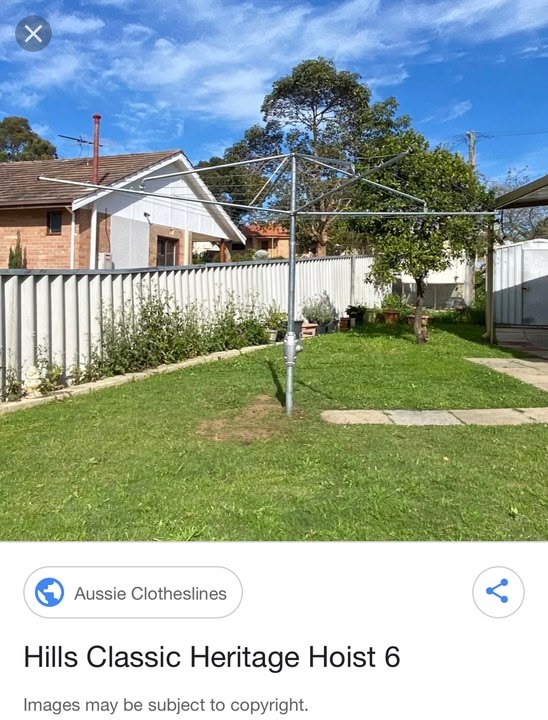
@TheOneyouwerewarnedabout The Hills Hoist is an iconic Australian height-adjustable rotary clothesline, invented by Lance Hill in 1945. Known for its durability, it features galvanised steel construction and a wind-up mechanism, allowing large laundry loads to rotate for efficient drying. It is a staple of suburban Australian backyards and often symbolizes Australian heritage.
I didn’t know any of this. Thank you, interesting.
I've got two . Set up to look like telephone poles/lines . One broke got to fix it . Love to smell fresh linen/clothing off the line . Birds can pose a problem . 🌞
@InterdimensionalSideEye I live in northern USA. I guess clothing can dry in cold temperatures from what I understand. I’ve never tried it, but we do use the lines in the summertime.