

hippyjoe1955 · 70-79, M


Jacko1971 · 51-55, M
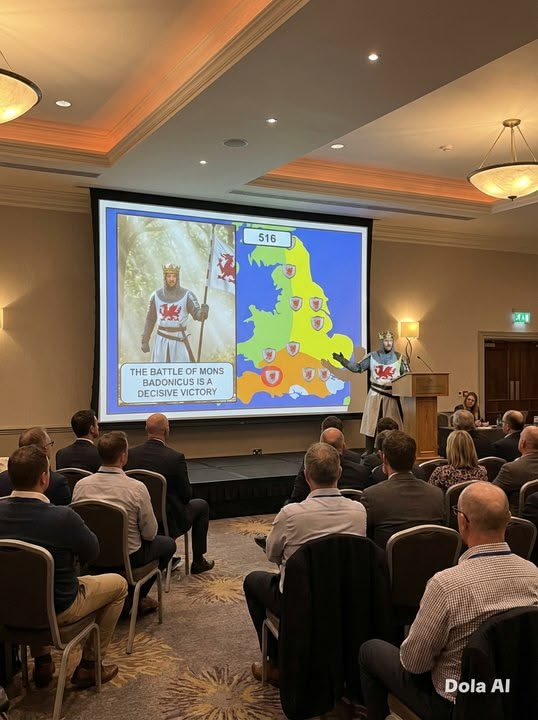
@emmasfriend England didn't exist at that time as such. Whoever it was that has been transformed into the legendary King Arthur would have been a Romano Briton. The dragon symbol was used by the Romans. In the early 500s, Angle and Saxon migration westards was halted by something or someone. That's where King Arthur comes in. Like all history, a lot of it is either hearsay or made up completely. But something did happen, and that's what im interested in.

ChipmunkErnie · 70-79, M
From everything I've read and seen in documentary videos, chances are there was no Arthur and most of the stories originate from France. And reading Malory's LE MORTE D'ARTHUR gives one a whole different concept of knightly chivalry -- I seem to remember quite a few women being killed by knights in that? Or maybe I'm wrong, it's been well over a decade since I read it.

Convivial · 26-30, F
My understanding is that all the Arthurian legends were based on one book written in the 16th century...
ArishMell · 70-79, M
This comment is hidden.
Show Comment
GoFish ·
ive never studied it
DeWayfarer · 61-69, M
Disregard everything from the fables accept the round table which has even earlier references around 1115 CE.
Please bear in mind the best fiction is usually based on a little bit of truth. And I do suspect that table is a little bit of the truth....
https://www.thecollector.com/true-history-round-table-king-arthur/
There's nothing magical about a round table for any band of knights.
Please bear in mind the best fiction is usually based on a little bit of truth. And I do suspect that table is a little bit of the truth....
https://www.thecollector.com/true-history-round-table-king-arthur/
There's nothing magical about a round table for any band of knights.
ArishMell · 70-79, M
For a start, ignore any Hollywood-esque nonsense.
In fact ignore stories about Arthur, Lancelot, Holy Grials and the like.
King Arthur is a work of fiction.
There has never been a King Arthur since Norman times (late-11th Century); and no known, English, King Arthur from the Saxon era the Normans replaced.
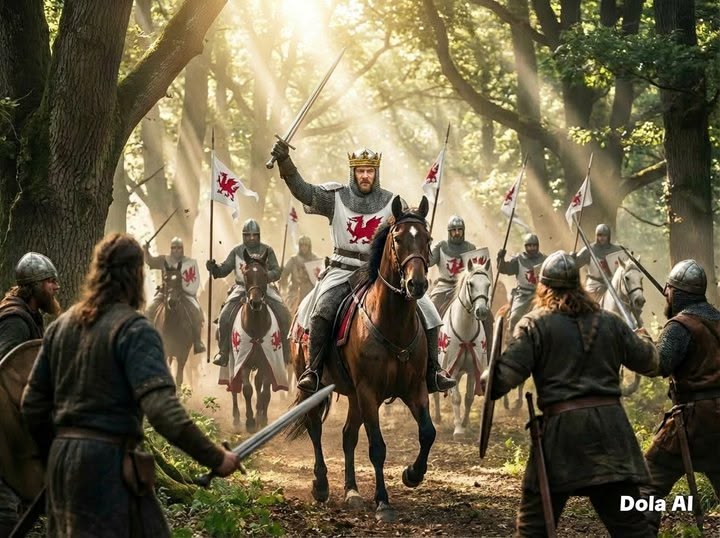
Even if there had been a Saxon king, when England was coalescing from several kingdoms, who might have inspired the story, he and his militia would not have looked anything like the characters in your illustration. That shows Mediaeval practice, contemporary with the Arthur story's original publication.
The Arthurian legends were invented in the 15th Century by the English writer. Sir Thomas Malory, in one of the first known novels. Even the writer Malory's identity is vague because there are several Thoman Malorys identified in the official records of the time!
Malory drew on older French sources for inspiration, and subsequently the French writer Chrétien de Troyes added Lancelot and the Holy Grail to the stories.
So if you want to study the Saxon era seriously and credibly, don't use a Mediaeval Norman novel as a source!
In fact ignore stories about Arthur, Lancelot, Holy Grials and the like.
King Arthur is a work of fiction.
There has never been a King Arthur since Norman times (late-11th Century); and no known, English, King Arthur from the Saxon era the Normans replaced.
Even if there had been a Saxon king, when England was coalescing from several kingdoms, who might have inspired the story, he and his militia would not have looked anything like the characters in your illustration. That shows Mediaeval practice, contemporary with the Arthur story's original publication.
The Arthurian legends were invented in the 15th Century by the English writer. Sir Thomas Malory, in one of the first known novels. Even the writer Malory's identity is vague because there are several Thoman Malorys identified in the official records of the time!
Malory drew on older French sources for inspiration, and subsequently the French writer Chrétien de Troyes added Lancelot and the Holy Grail to the stories.
So if you want to study the Saxon era seriously and credibly, don't use a Mediaeval Norman novel as a source!