ArishMell · 70-79, M
Many people remain childless for various reasons even if having wished to become a parent, but although having "biological" children (are there any other sort?) is important in pure biology, as species-continuation, offspring are individual people. They are not possessions, not fashion-accessories, and breeding is not a duty. Not, for example, something to be undertaken merely because one's own parents want to be grandparents; or to suit some vacuous social stereotype.
Anecdotally at least, some couples claim to choose to remain childless because they fear for the future of society.
Others, more practically and logically perhaps, do so because they recognise being in an insufficiently stable situation to support a family for the best part of two decades.
Or because they fear they would not be good, loving parents - though quite a few people with that fear originally, do seem to become ones.
Your trying to link people alive now, or those to be, by any form of heredity test to people who lived over 200 millennia ago, is absurd.
The best you might manage is a millenium, and then only if your family line is sufficiently well recorded over that time. Which is very unlikely for most of us.
Yes, you can buy commercial DNA "profiles" claiming to estimate your ethnic"ancestry" some random centuries back, but the individual DNA of any sexually-reproductive organism - including our species - is practically half and half by parent.
So it does not take long at approximately 4 generations per century for geneology by DNA to become vague and eventually meaningless. The number two is a very small quantity until used as a continuing exponent!
Over that millenium averaging 4 generations per century? That's 40 generations, each inheriting 1/2 of each of its parents' genetic code.
So assuming that average was maintained from one birth in 1026, a baby born this year will have inherited only [ 1/ {2 (^40) } ] of each of its 11C ancestors' genes.
A vanishingly tiny fraction.
Anecdotally at least, some couples claim to choose to remain childless because they fear for the future of society.
Others, more practically and logically perhaps, do so because they recognise being in an insufficiently stable situation to support a family for the best part of two decades.
Or because they fear they would not be good, loving parents - though quite a few people with that fear originally, do seem to become ones.
Your trying to link people alive now, or those to be, by any form of heredity test to people who lived over 200 millennia ago, is absurd.
The best you might manage is a millenium, and then only if your family line is sufficiently well recorded over that time. Which is very unlikely for most of us.
Yes, you can buy commercial DNA "profiles" claiming to estimate your ethnic"ancestry" some random centuries back, but the individual DNA of any sexually-reproductive organism - including our species - is practically half and half by parent.
So it does not take long at approximately 4 generations per century for geneology by DNA to become vague and eventually meaningless. The number two is a very small quantity until used as a continuing exponent!
Over that millenium averaging 4 generations per century? That's 40 generations, each inheriting 1/2 of each of its parents' genetic code.
So assuming that average was maintained from one birth in 1026, a baby born this year will have inherited only [ 1/ {2 (^40) } ] of each of its 11C ancestors' genes.
A vanishingly tiny fraction.
ElwoodBlues · M
@ArishMell Yes, looking back 1000 years, we each would have approx 10^12 (one thousand billion) ancestors. Since the population of Earth 1000 years ago was less than 400 million, that means the ancestral family tree stopped branching.
I read this interesting factoid that applies to those of us with a reasonable fraction of European ancestry. Consider the population of Europe 1000 years ago: 1/4 of them had no issue; the other 3/4 are ancestors to us all!
So yes, you are directly descended from both Charlemagne and William the Conquerer!!
I read this interesting factoid that applies to those of us with a reasonable fraction of European ancestry. Consider the population of Europe 1000 years ago: 1/4 of them had no issue; the other 3/4 are ancestors to us all!
So yes, you are directly descended from both Charlemagne and William the Conquerer!!
ArishMell · 70-79, M
@ElwoodBlues It doesn't quite work like that, which would imply the world's population shrinking from some huge past total.
Of those Mediaeval and later parents, many had several children who managed to survive to become parents themselves. This, overall, more than compensated for those who had no issue; and those who did but whose children did not survive into adulthood.
StygianKohlrabi · 46-50, M
your children aren't your personal property
View 10 more replies »
StygianKohlrabi · 46-50, M
@LibertarianEmily so at some point they don't even know who you are. only your children and maybe your grandchildren will recognize you. after a couple generations your role as a parent is largely forgotten and nobody cares. it's a lifestyle choice. the human race will go on without you.
LibertarianEmily · 26-30, F
@StygianKohlrabi yeah, again... that's all meaning you're adding to my comment. None of that is at all relevant to my perspective... though you're entitled to think whatever you want ofc
StygianKohlrabi · 46-50, M
@LibertarianEmily you have kids and you're happy with them. that's all that matters.
that being said it's not for everyone.
Tastyfrzz · 61-69, M
I know of people afraid of passing on genetic diseases and deformities.
Key Inherited Genetic Diseases and Deformities
Cystic Fibrosis: Causes severe respiratory and digestive issues.
Sickle Cell Disease: A disorder causing abnormal red blood cell production.
Huntington's Disease: A progressive neurodegenerative disorder.
Thalassemia: A blood disorder requiring lifelong care.
Fragile X Syndrome: A leading cause of inherited intellectual disability.
Down Syndrome: A chromosomal abnormality (extra chromosome 21) affecting development.
Marfan Syndrome: A connective tissue disorder affecting the skeleton, eyes, and heart.
Flat feet (pes planus) are often genetic and run in families, often passed down as inherited traits that affect foot structure. While many children are born with flat feet and develop arches later, a genetic predisposition can lead to permanent, flexible flat feet. However, they can also develop later in life due to injury, aging, or obesity.
Neurofibromatosis: Causes tumors to grow on nerve tissue.
Hemophilia: A bleeding disorder that slows blood clotting.
Spinal Muscular Atrophy (SMA): A condition leading to progressive muscle weakness.
Brittle bone disease.
Key Genes Associated with Ovarian CancerBRCA1 & BRCA2:
The most common cause of hereditary ovarian cancer, crucial for DNA repair.
ANKRD11 & POLE: Identified through whole-exome sequencing as potential susceptibility genes in families with a high history of the disease.
TMEM158: Upregulated in ovarian cancer, promoting proliferation, migration, and tumor growth.
ETS1: A transcription factor involved in the progression and metastasis of ovarian cancer cells.
Common Genetic Variants: Genome-wide association studies (GWAS) have identified at least six susceptibility loci, mostly associated with the serous subtype.
Other Factors
Mismatch Repair Genes: Mutations in genes associated with Lynch syndrome (e.g., MLH1, MSH2, MSH6, PMS2) also increase risk.
======
Common Types of Genetic Heart DiseaseCardiomyopathies:
Inherited heart muscle diseases, including Hypertrophic Cardiomyopathy (HCM)—the leading cause of sudden cardiac death in young athletes—and dilated cardiomyopathy, where the heart becomes enlarged or thick.
Inherited Arrhythmias (Channelopathies): Electrical issues such as Long QT Syndrome (LQTS), Brugada syndrome, and Catecholaminergic polymorphic ventricular tachycardia (CPVT), which cause dangerous, fast, or chaotic heartbeats.
Familial Hypercholesterolemia (FH): A genetic disorder causing extremely high LDL "bad" cholesterol from birth, significantly increasing early heart attack risks.
Structural/Connective Tissue Disorders: Conditions like Marfan syndrome, which can lead to aortic aneurysms (weakness in the aorta).
======
Inherited Structural Deformities/Congenital Anomalies
Cleft Lip/Palate: Facial anomaly requiring surgical repair.
Spina Bifida: A defect in the spinal column.
Polydactyly: Extra fingers or toes.
Limb Defects: Missing or incomplete limbs.
Congenital Heart Disease: Heart structural issues.
Craniosynostosis: Misshapen skull due to premature suture closure.
Types of Inheritance
Autosomal Dominant: Only one parent needs to pass the gene (e.g., Huntington's).
Autosomal Recessive: Both parents must pass the gene (e.g., Cystic Fibrosis).
X-linked Recessive: Affects mostly males; mothers are often carriers (e.g., Hemophilia).
Chromosomal Abnormalities: Caused by missing or extra chromosomes, often occurring randomly but can be inherited (e.g., Down syndrome).
Achondroplasia is the most common type of skeletal dysplasia caused by a change in the FGFR3 (fibroblast growth factor receptor 3) gene, which slows bone growth, leading to disproportionate short stature.
Acromegaly is a rare hormonal disorder that develops when the body produces too much growth hormone (GH), usually due to a benign tumor in the pituitary gland called an adenoma. This causes excess growth of bones and tissue over time that can lead to serious health complications and, if left untreated, premature death. People with acromegaly have a significant disease burden with high impact on their general health and quality of life.
‐-----
Near sightedness.
-------
Deafness
Up to 60% of pediatric hearing loss (HL) cases and ~40% of auditory neuropathy spectrum disorder (ANSD) cases are caused by genetic variants. GJB2 variants are the most common cause of autosomal recessive nonsyndromic hearing loss (ARNSHL), and OTOF variants are the leading cause of ANSD.1-4
//////////
Mental illnesses:
Key Genetically Linked Mental Illnesses
Bipolar Disorder: One of the most inheritable, with an up to 80% likelihood of genetic influence, making it highly familial.
Schizophrenia: Strong familial link, with risks increasing significantly if first-degree relatives are affected.
Attention-Deficit/Hyperactivity Disorder (ADHD): Highly hereditary, with studies suggesting up to 74% heritability, often passing from parent to child.
Autism Spectrum Disorder (ASD): Significant genetic basis, often involving rare or complex gene variations.
Major Depressive Disorder (MDD): Common, with significant genetic links to neurotransmitter regulation and susceptibility to stress.
Anxiety Disorders: Including generalized anxiety disorder, panic disorder, and phobias, which often share genetic predispositions with depression.
Obsessive-Compulsive Disorder (OCD) and Eating Disorders: Research highlights shared genetic factors between compulsive behaviors and anorexia.
======
And some are afraid of even passing on potential skin pigmentation in racist societies.
(See the book, The Private Librarian).
Key Inherited Genetic Diseases and Deformities
Cystic Fibrosis: Causes severe respiratory and digestive issues.
Sickle Cell Disease: A disorder causing abnormal red blood cell production.
Huntington's Disease: A progressive neurodegenerative disorder.
Thalassemia: A blood disorder requiring lifelong care.
Fragile X Syndrome: A leading cause of inherited intellectual disability.
Down Syndrome: A chromosomal abnormality (extra chromosome 21) affecting development.
Marfan Syndrome: A connective tissue disorder affecting the skeleton, eyes, and heart.
Flat feet (pes planus) are often genetic and run in families, often passed down as inherited traits that affect foot structure. While many children are born with flat feet and develop arches later, a genetic predisposition can lead to permanent, flexible flat feet. However, they can also develop later in life due to injury, aging, or obesity.
Neurofibromatosis: Causes tumors to grow on nerve tissue.
Hemophilia: A bleeding disorder that slows blood clotting.
Spinal Muscular Atrophy (SMA): A condition leading to progressive muscle weakness.
Brittle bone disease.
Key Genes Associated with Ovarian CancerBRCA1 & BRCA2:
The most common cause of hereditary ovarian cancer, crucial for DNA repair.
ANKRD11 & POLE: Identified through whole-exome sequencing as potential susceptibility genes in families with a high history of the disease.
TMEM158: Upregulated in ovarian cancer, promoting proliferation, migration, and tumor growth.
ETS1: A transcription factor involved in the progression and metastasis of ovarian cancer cells.
Common Genetic Variants: Genome-wide association studies (GWAS) have identified at least six susceptibility loci, mostly associated with the serous subtype.
Other Factors
Mismatch Repair Genes: Mutations in genes associated with Lynch syndrome (e.g., MLH1, MSH2, MSH6, PMS2) also increase risk.
======
Common Types of Genetic Heart DiseaseCardiomyopathies:
Inherited heart muscle diseases, including Hypertrophic Cardiomyopathy (HCM)—the leading cause of sudden cardiac death in young athletes—and dilated cardiomyopathy, where the heart becomes enlarged or thick.
Inherited Arrhythmias (Channelopathies): Electrical issues such as Long QT Syndrome (LQTS), Brugada syndrome, and Catecholaminergic polymorphic ventricular tachycardia (CPVT), which cause dangerous, fast, or chaotic heartbeats.
Familial Hypercholesterolemia (FH): A genetic disorder causing extremely high LDL "bad" cholesterol from birth, significantly increasing early heart attack risks.
Structural/Connective Tissue Disorders: Conditions like Marfan syndrome, which can lead to aortic aneurysms (weakness in the aorta).
======
Inherited Structural Deformities/Congenital Anomalies
Cleft Lip/Palate: Facial anomaly requiring surgical repair.
Spina Bifida: A defect in the spinal column.
Polydactyly: Extra fingers or toes.
Limb Defects: Missing or incomplete limbs.
Congenital Heart Disease: Heart structural issues.
Craniosynostosis: Misshapen skull due to premature suture closure.
Types of Inheritance
Autosomal Dominant: Only one parent needs to pass the gene (e.g., Huntington's).
Autosomal Recessive: Both parents must pass the gene (e.g., Cystic Fibrosis).
X-linked Recessive: Affects mostly males; mothers are often carriers (e.g., Hemophilia).
Chromosomal Abnormalities: Caused by missing or extra chromosomes, often occurring randomly but can be inherited (e.g., Down syndrome).
Achondroplasia is the most common type of skeletal dysplasia caused by a change in the FGFR3 (fibroblast growth factor receptor 3) gene, which slows bone growth, leading to disproportionate short stature.
Acromegaly is a rare hormonal disorder that develops when the body produces too much growth hormone (GH), usually due to a benign tumor in the pituitary gland called an adenoma. This causes excess growth of bones and tissue over time that can lead to serious health complications and, if left untreated, premature death. People with acromegaly have a significant disease burden with high impact on their general health and quality of life.
‐-----
Near sightedness.
-------
Deafness
Up to 60% of pediatric hearing loss (HL) cases and ~40% of auditory neuropathy spectrum disorder (ANSD) cases are caused by genetic variants. GJB2 variants are the most common cause of autosomal recessive nonsyndromic hearing loss (ARNSHL), and OTOF variants are the leading cause of ANSD.1-4
//////////
Mental illnesses:
Key Genetically Linked Mental Illnesses
Bipolar Disorder: One of the most inheritable, with an up to 80% likelihood of genetic influence, making it highly familial.
Schizophrenia: Strong familial link, with risks increasing significantly if first-degree relatives are affected.
Attention-Deficit/Hyperactivity Disorder (ADHD): Highly hereditary, with studies suggesting up to 74% heritability, often passing from parent to child.
Autism Spectrum Disorder (ASD): Significant genetic basis, often involving rare or complex gene variations.
Major Depressive Disorder (MDD): Common, with significant genetic links to neurotransmitter regulation and susceptibility to stress.
Anxiety Disorders: Including generalized anxiety disorder, panic disorder, and phobias, which often share genetic predispositions with depression.
Obsessive-Compulsive Disorder (OCD) and Eating Disorders: Research highlights shared genetic factors between compulsive behaviors and anorexia.
======
And some are afraid of even passing on potential skin pigmentation in racist societies.
(See the book, The Private Librarian).
SatanBurger · 36-40, F
Also who wants kids when you can go to prison for having a miscarriage
SatanBurger · 36-40, F
@ArishMell
....
You can't get immediate medical treatment because oftentimes women don't know they are having miscarriages and they may not be in a place where there is none.
This article was in 2024 but in 2026 it's even worse a few went to the hospital and had ordeals there.
Women in South Carolina, Georgia, Ohio, Arkansas, Texas, Mississippi, Oklahoma and several other states have faced criminal charges after a miscarriage or stillbirth for failing to seek immediate medical treatment, not pursuing prenatal care or disposing of the fetal remains in a way that law enforcement or prosecutors considered improper.
https://www.themarshallproject.org/2024/10/31/stillbirth-oklahoma-arkansas-women-investigated#
....
You can't get immediate medical treatment because oftentimes women don't know they are having miscarriages and they may not be in a place where there is none.
This article was in 2024 but in 2026 it's even worse a few went to the hospital and had ordeals there.
tenente · 36-40, M
@SatanBurger 👍 i admire your patience and determination - even though MAGA aren't listening 🤷♂
ArishMell · 70-79, M
@SatanBurger Thankyou for explaining it. Grim reading....
SunshineGirl · 36-40, F
Some of us are physically incapable of producing biological children. Providing children who are already born with food, shelter, security and love will be my legacy.
LibertarianEmily · 26-30, F
@SunshineGirl I strongly believe in that too which is why I adopted my nephew and niece :) but that is why I said purposely... and I didn't add a value judgement. I just feel that it's an amazing biological fact.
IloveLucy · 22-25, F
Kinda hard to have kids with another woman
Magicianzini · M
Not necessarily if the person has siblings who procreate the line then continues.
SatanBurger · 36-40, F
Why is it important to have kids? After I'm dead it's not like I'll care. I mean honestly it would be my metaphorical children who would experience life separate from myself. If it's not me that experiences life, I don't really care. It doesn't matter much to me as I want to experience this life for me and not others
JimboSaturn · 56-60, M
@SatanBurger They say that in only a couple of generations tops, no one will even know you existed.
SatanBurger · 36-40, F
@JimboSaturn That's true, you only got this one life might as well enjoy it
BohoBabe · M
Ah well. 🤷🏻
ViciDraco · 41-45, M
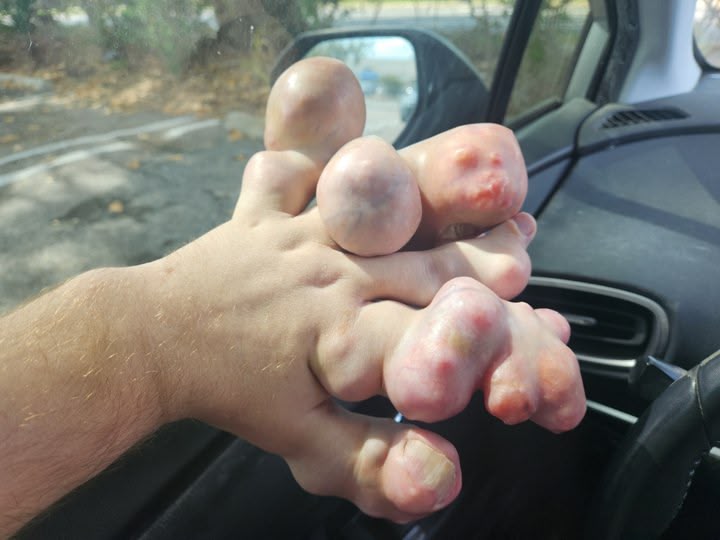
This is a picture of my left hand.
Twelve years ago I lost my left leg to actual bone cancer that set into my left hip.
Would any children have inherited these things? It's hard to say. But the guilt I would feel if I had children that did inherit these things would be pretty high.
Shaming people for choosing not to have children doesn't seem like a very Libertarian thing to do.
Twelve years ago I lost my left leg to actual bone cancer that set into my left hip.
Would any children have inherited these things? It's hard to say. But the guilt I would feel if I had children that did inherit these things would be pretty high.
Shaming people for choosing not to have children doesn't seem like a very Libertarian thing to do.
tenente · 36-40, M
i feel seen 🤗
1490wayb · 56-60, M
not passing on my family's dysfunction and mental problems is a good thing...i can barely support myself also.
PatientlyWaiting25 · 46-50, F
I couldn't stay pregnant.. well, we gave up trying after the 4th miscarriage. I have never worried about such things.
Alyosha · 36-40, M
So what?
NativePortlander1970 · 56-60
@LibertarianEmily Or maybe some of us decided to end the cycle of abuse one parent perpetrated.
Alyosha · 36-40, M
@LibertarianEmily Right, but I don't live my life to accord with survival of the fittest. I'm not Jeffrey Epstein with a breeding ranch, planning to impregnate as many women as possible. My contributions or lack thereof are individual, I don't only amount to how many children I manufactured.
@LibertarianEmily Who gives a !@#$.
CrazyMusicLover · 31-35
Nope, they didn't kill anything, they simply let it die out.
LibertarianEmily · 26-30, F
@CrazyMusicLover fair point
JimboSaturn · 56-60, M
So what. No one is that special that they need to spread their genes.
Does that include those who can't? Bc that's a thing too...
You shouldn't do it just to do it, regardless of what anyone who came before you was pressured into or chose to do of their own volition.
greensnacks · F
Some lines are meant to be cut.