OogieBoogie · F
I knew there was two, but not THREE ! 😯
BluntSm0ker · 100+, M
@OogieBoogie
The "Britannic" which never got to be a passenger ship cause of WW1, got turned into a hospital ship, hit a sea mine and sank.
The RMS Olympic is actually the "unsinkable one" it got rammed by another ship and torpedoed, never sank, it's a shame it got scrapped in the 30s they should of turned it into a hotel like the Queen Mary, it was almost identical to Titanic, some of pics of the Titanic are actually the Olympic cause it got more publicity, more photographed & was made a year earlier, Titanic got more famous after the sinking.
The "Britannic" which never got to be a passenger ship cause of WW1, got turned into a hospital ship, hit a sea mine and sank.
The RMS Olympic is actually the "unsinkable one" it got rammed by another ship and torpedoed, never sank, it's a shame it got scrapped in the 30s they should of turned it into a hotel like the Queen Mary, it was almost identical to Titanic, some of pics of the Titanic are actually the Olympic cause it got more publicity, more photographed & was made a year earlier, Titanic got more famous after the sinking.
OogieBoogie · F
@BluntSm0ker Gosh that is a shame.
Did you know Jack could of lived if he just moved that bish over
View 1 more replies »
Sidewinder · 36-40, M
@BluntSm0ker Even if they could, it still wouldn't have changed the fact that there weren't enough lifeboats for all 2,200 people aboard when the Titanic was sinking.
The Titanic had 20 lifeboats, (16 principal boats and 4 collapsibles) each with a capacity for up to 60 people and each lifeboat was lowered with less than 60 people to each boat, because the crew loading passengers into the boats weren't sure of the weight.
Had each boat been filled to capacity before being lowered away, there would have been an estimated 1,100 survivors, leaving an estimated 1,100 casualties.
Also, the Titanic's passengers were segregated into three classes, First, Second and Third, respectively.
And depending on which class you travelled as, either added to or subtracted from your odds of survival.
For instance, if you were Third Class, (also known as Steerage) your odds of survival would have been far slimmer than if you were Second or First Class.
Also, there were some who willingly gave up their seats in the boats and opted to go down with the ship.
One such person was First Class passenger, Benjamin Guggenheim who chose to and I quote: "Dress in his best and go down like a gentleman."
Two other people who willingly refused a seat in a lifeboat were Isador and Ida Strauss.
Even though women and children first was the rule, Isador Strauss was an exception because of his age.
And even though Isador persuaded Ida to get into a boat, she refused, saying to him: "We've been married together for 40 years and wherever you go, I go," so they both willingly went down with the ship.
One of the craziest survivor stories was that of the Titanic's Chief Baker, Charles Joughin, who throughout the sinking of the ship, started consuming many alcoholic beverages and rode the ship down in it's final phase of it's descent to the bottom of the ocean.
It was the consumption of alcohol that became a contributing factor in his survival as it kept his core temperature from dropping when he ended up in the ice-cold water of the Atlantic Ocean.
Once in the water, he swam to the overturned Collapsibe Lifeboat B, which many people floated on the underside of until rescued by one of the other lifeboats.
All-in-all, 13 out of 20 lifeboats were picked up by the RMS Carpathia, containing about 700 +/- survivors.
The remaining boats were abandoned and set adrift after passengers were transferred from lifeboat-to-lifeboat in order to go back and pick up any potential survivors.
One boat that went back was boat 14, commanded by 5th Officer, Harold Lowe, who returned to search, found many corpses floating in the water, all of whom subcummed to hypothermia.
There was one survivor, a Chinese man, (most likely a Third Class passenger) floating on a door used as an impromptu raft. that was saved by Lowe's boat before regrouping with the others and heading for the Carpathia.
The Titanic had 20 lifeboats, (16 principal boats and 4 collapsibles) each with a capacity for up to 60 people and each lifeboat was lowered with less than 60 people to each boat, because the crew loading passengers into the boats weren't sure of the weight.
Had each boat been filled to capacity before being lowered away, there would have been an estimated 1,100 survivors, leaving an estimated 1,100 casualties.
Also, the Titanic's passengers were segregated into three classes, First, Second and Third, respectively.
And depending on which class you travelled as, either added to or subtracted from your odds of survival.
For instance, if you were Third Class, (also known as Steerage) your odds of survival would have been far slimmer than if you were Second or First Class.
Also, there were some who willingly gave up their seats in the boats and opted to go down with the ship.
One such person was First Class passenger, Benjamin Guggenheim who chose to and I quote: "Dress in his best and go down like a gentleman."
Two other people who willingly refused a seat in a lifeboat were Isador and Ida Strauss.
Even though women and children first was the rule, Isador Strauss was an exception because of his age.
And even though Isador persuaded Ida to get into a boat, she refused, saying to him: "We've been married together for 40 years and wherever you go, I go," so they both willingly went down with the ship.
One of the craziest survivor stories was that of the Titanic's Chief Baker, Charles Joughin, who throughout the sinking of the ship, started consuming many alcoholic beverages and rode the ship down in it's final phase of it's descent to the bottom of the ocean.
It was the consumption of alcohol that became a contributing factor in his survival as it kept his core temperature from dropping when he ended up in the ice-cold water of the Atlantic Ocean.
Once in the water, he swam to the overturned Collapsibe Lifeboat B, which many people floated on the underside of until rescued by one of the other lifeboats.
All-in-all, 13 out of 20 lifeboats were picked up by the RMS Carpathia, containing about 700 +/- survivors.
The remaining boats were abandoned and set adrift after passengers were transferred from lifeboat-to-lifeboat in order to go back and pick up any potential survivors.
One boat that went back was boat 14, commanded by 5th Officer, Harold Lowe, who returned to search, found many corpses floating in the water, all of whom subcummed to hypothermia.
There was one survivor, a Chinese man, (most likely a Third Class passenger) floating on a door used as an impromptu raft. that was saved by Lowe's boat before regrouping with the others and heading for the Carpathia.
BluntSm0ker · 100+, M
@Sidewinder
I know all this, did you just copy n paste, or you knew this yourself?
Sidewinder · 36-40, M
@BluntSm0ker I've been reading books and watching documentaries about the Titanic ever since I saw the movie in the theatre for the first time as a way of discerning the fact from the fiction.
And i've always had a knack for memorizing just about everything I've ever read and/or watched.
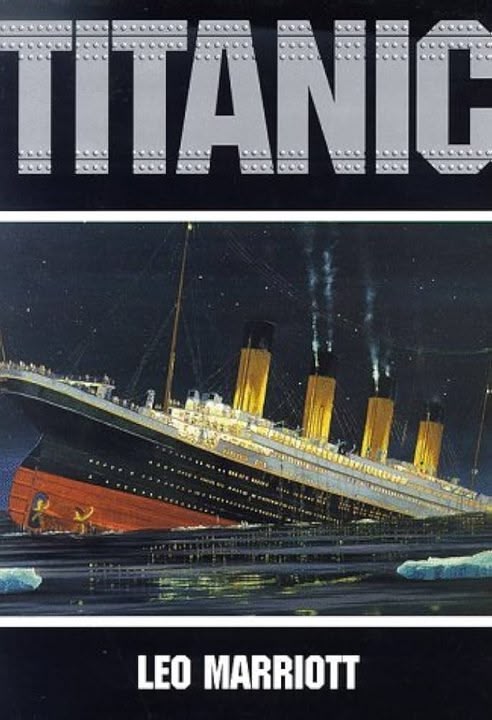
This was just one of the many books about the Titanic I've read cover-to-cover at the time.
And i've always had a knack for memorizing just about everything I've ever read and/or watched.
This was just one of the many books about the Titanic I've read cover-to-cover at the time.
Convivial · 26-30, F
I knew about the Olympic...
BluntSm0ker · 100+, M
@Convivial
It sad that they just scrapped it.
GoFish ·
i suppose they never sank ?
BluntSm0ker · 100+, M
@GoFish
The Britannic sank also, ran into a sea mine during WW1.
GoFish ·
@BluntSm0ker oh 😳
empanadas · 31-35, M
All of them got Leonardo being a simp
BluntSm0ker · 100+, M