Asking
Only logged in members can reply and interact with the post.
Join SimilarWorlds for FREE »

Guess who's paying the tab for all the giant bank failures earlier this year?
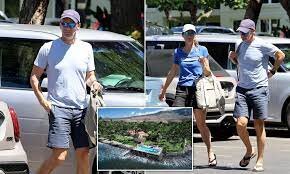


Photo above - CEO of failed Silicon Valley Bank, and his Hawaiian vacation home.
Not shown - how much ATM and checking account fees will rise to cover this year's bank bailouts.


FDIC sets $1.9 billion special assessment from Wells Fargo (journalnow.com)

Don't worry. No customer will lose ONE PENNY.” The FDIC always says that when a bank fails. The regulators even made a special effort this time to reassure America's elites that all their non-insured jumbo ($ millions) certificates of deposit would be covered. Even though the insurance is only supposed to protect ordinary people, like you and me.

The bank failures which I'm referring to of course are Silicon Valley Bank, First Republic, and Signature Bank. All three are dead and buried. Bought the farm. But the silver lining: no millionaire depositor lost a penny! And the cost of bailing them out is being assessed against – the rest of America's banks. The SAFE ones, which played by the rules. See link above.

The total cost of these bank failures is (currently) estimated at $20 billion. Subject to change. The accountants who are reviewing this may be the same ones who mis-forecast the US deficit last month, so cross your fingers. And another bank failed last week, but nobody was paying attention, so maybe it didn't really happen. If a tree falls in the forest, and no one is there, does it make a sound?

Bank of America and Wells Fargo have already been tagged with a $4 billion “special fee” to replenish the FDIC's bailout war-chest. This is just the first shoe dropping. There will probably be additional fees assessed against Chase, Citibank, PNC, Capitol One, Citizens Bank, US Bank . . . If I left your bank off this list, it was inadvertent. It will likely pay to fix this, too.

If you were a customer of the 3 failed banks above, congrats on not losing a penny. Your money is now safely in the hands of . . . the surviving banks. But the billions in “special fees” being assessed by the FDIC will be paid by us anyway. Higher checking account fees. Return check fees. ATM charges. Credit card interest. Mortgage interest. Late payment fees. You think I'm kidding? Where the heck do you think banks get all their money from? Especially the money they pay the US government. Both normal taxes, and “special fees” like this bailout debacle.

SOMEBODY is going to end up paying at least $20 Billion higher fees and interest to fix this fiasco. We all are. Who do you think ATM fees, etc. fall hardest on? The millionaire elites, or you and me? Don't think too hard about this - it's not a trick question.

Here's my gripe, though. The biggest and worst bank failure this year (so far) was Silicon Valley Bank. The one whose CEO was an actual Federal Reserve official. The guy who fled to his Hawaiian vacation home on the next plane out, after SVB failed. He's still on the street, a free man. In fact, all 3 of the failed banks were closely supervised by the FDIC. Because they were weirdos, which didn't make their money the usual way through checking account fees, ATM fees, and mortgages. They were being watched by the FDIC but were greenlighted on all the weird stuff they did. Then all 3 failed, in a matter of days.

I don't like having that Federal Reserve Exec/CEO of Silicon Valley Bank walking around free. In fact, I don't like it that NONE of the Federal Reserve governors face consequences for these failures. You'd think there would be some accountability. You'd think . . .

But this is the US government. Customers and taxpayers are responsible for the cleanup of this mess. Let's check our bank statements and ATM receipts going forward and remind ourselves that it's always the little guy who bails out the millionaires and FDIC.

I'm just sayin' . . .
Top | New | Old
Northwest · M
List of banks impacted, and they're not impacted because they play by the rules, but because being a bank, means abiding by the FDIC rules for reserves recovery. What banks are affected, and how will they deal with the payments:

Wells Fargo: Up to $1.8 bln pre-tax - Will expense the entire amount upon FDIC's finalization of the proposal.

Bank of America: Non-interest expense of nearly $1.9 bln - Cost would be recognized upon finalization of the proposal.

Goldman Sachs Group: About $400 mln pre-tax - Expense would be recognized entirely in the quarter in which the rule is adopted.

PNC Financial Services Group: Nearly $468 mln pre-tax, or $370 mln after-tax - Would be incurred in the quarter the FDIC finalizes the proposal.

JPMorgan Chase: About $3 bln pre-tax - Would be recognized in the quarter in which the proposal is finalized, which is expected in the second half of 2023.

Morgan Stanley - About $270 mln - Will recognize after the final rule is published.

Truist Financial: About $460 mln - Would be recognized at the time the proposal is finalized and paid in eight quarterly installments beginning in the first quarter of 2024.

Citigroup: Up to $1.5 billion pre-tax - May incur a significant increase in operating expenses if the final rule for the FDIC special assessment is enacted as proposed, which is expected before 2023 end.

The Obama administration pushed a law giving he FDIC authority to recover executive compensation when the regulator must take over and liquidate a big, complex financial institution that’s failing, but the authority doesn’t extend to banks the size of Signature and SVB. The Biden White House, in March 2023, asked Congress to ensure that it does.

The GOP-led House will not move on it. In the Senate, there seems to be more bi-partisan support to act on it, but it's not going anywhere without House approval.

And no, this does not mean higher ATM fees, or higher other fees. See the list above, for these banks are going to actually deal with it.
SusanInFlorida · 31-35, F
@Northwest thanks for your reply. But you missed the point entirely. or are willfully ignoring.

all those bailout fees are going to be paid by ordinary customers - you and me. they'll become part of the money we pay for ATM use, checking accounts, etc.

Why should we pay for bailing out millionaire CDs at a high risk bank? Shouldn't the millionaires (or their accounts) be expected to do better due diligence when deciding to buy a $10 million CD? If these guys constantly get bailed out by ordinary workers, how is that fair?
Northwest · M
@SusanInFlorida
all those bailout fees are going to be paid by ordinary customers - you and me. they'll become part of the money we pay for ATM use, checking accounts, etc.

Once more: No. And once more, read the list I posted, of how and when these institutions will be expensing the charges. That should give you a clue, but you don't really understand how this works.

Why should we pay for bailing out millionaire CDs at a high risk bank? Shouldn't the millionaires (or their accounts) be expected to do better due diligence when deciding to buy a $10 million CD? If these guys constantly get bailed out by ordinary workers, how is that fair?

And you close with a strawman.
Reinstate the Glass Steagall Act and get commercial banks out of the investment business to safeguard their customers funds.
Problem solved .
SusanInFlorida · 31-35, F
@Onestarlitnight i'm inclined to agree. But "someone" paid a lot of money to congress to convince them that banks are stronger/more resiliant with diverse income sources.

in any case, the SVB and First Republic failures were unrelated to securities investments. They were offing jumbo CDs (certificates of deposit) with outlandishly high rates to favored depositors. Ordinary bank, but risky enough to warrant a cease and desist order. Which no one at the FED gave, because the guy running SVB was federal reserve governor himself.
WillaKissing · 56-60, M
I agree with you and if it were you/Me, they would prosecute you/me and take our property and freedom until the debt was settled.
LordShadowfire · 46-50, M
@WillaKissing But it's true. Rich people can afford lawyers to get out of trouble, while the rest of us are screwed, whether we are guilty or not. That is a direct result of the massive inequalities in a capitalist society.
WillaKissing · 56-60, M
@LordShadowfire I agree with you on this. I do believe the system is not running as the founders of this nation wanted it too presently. I believe greed and power took over the capitalistic society and the rest of the Nation has become the surfs of the old kingdom days.
SusanInFlorida · 31-35, F
@WillaKissing i agree with your observation about what the founding fathers would have envisioned.

but of course in those days the founding fathers lived in an era where . ..

1. there were no checking accounts at all.
2. Banks could, and did, issue their own private currency
3. There was no income tax
4. there was no national debt

and so on.

Don't tell me "greed" is worse today. Back then we had plantations, slaves, indentured Europeans working in the north, and only propertied men (who owned real estate) could vote, to keep out the riff-raff.

Know your history, LOL !!!!
Crazywaterspring · 61-69, M
Socialism American style.
Picklebobble2 · 61-69, M
Can't afford small bank culture anymore.
They just don't have sufficient clout to avoid going under at the whim of a dodgy policymaker or two.
SusanInFlorida · 31-35, F
@Picklebobble2 regulators always tell us they prefer large banks. easy to keep track of. this year disproves that.
Picklebobble2 · 61-69, M
@SusanInFlorida Oh banks are the dodgiest of operators. Always have been.
But risks are being taken now because they'll whine they couldn't do them during covid and shareholders deserve.....
But there's only so may small banks you can hit before one is connected to the products of a larger bank......and then the muck really does hit the fan
LordShadowfire · 46-50, M
Gee whiz. I guess Donald Trump maybe shouldn't have fucked with the Dodd-Frank Act while he was in office, huh? Course, I didn't see Biden undoing what he did, either.
SusanInFlorida · 31-35, F
@LordShadowfire is there a link to this? did he suspend the act through executive order?

 
Post Comment