Fun
Only logged in members can reply and interact with the post.
Join SimilarWorlds for FREE »

Long Live π!

Poll - Total Votes: 15
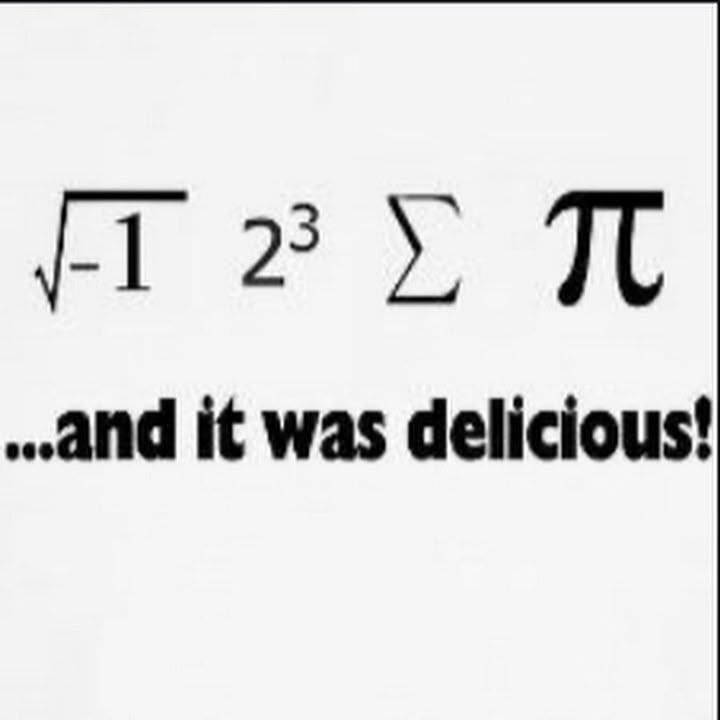
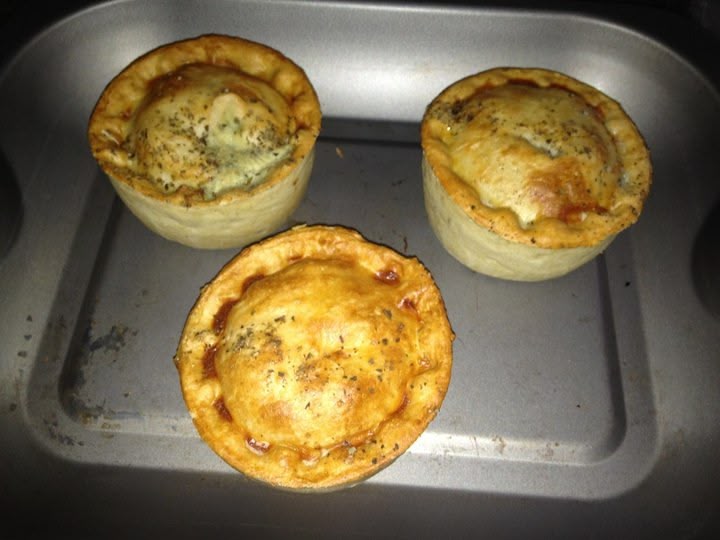
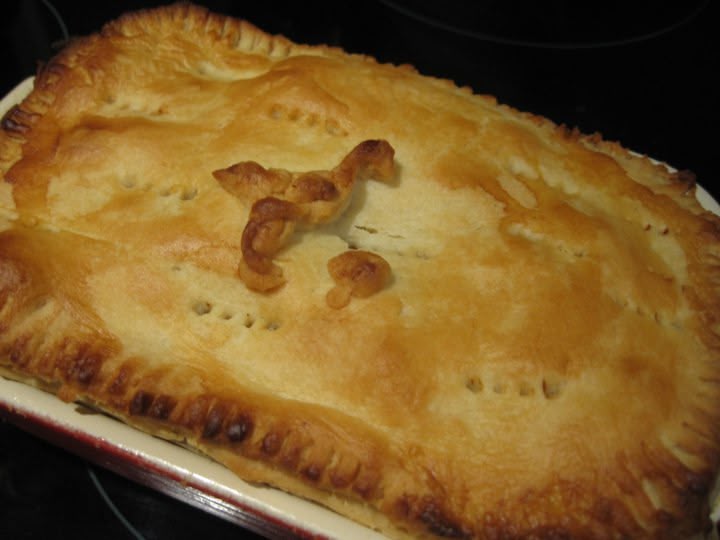
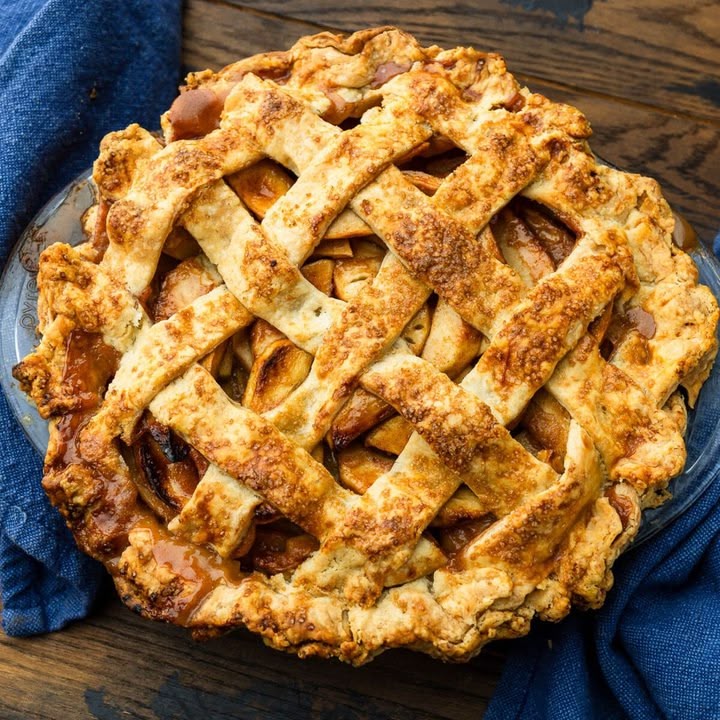
The only π I like is apple π.
Stick with your books, old nerd!
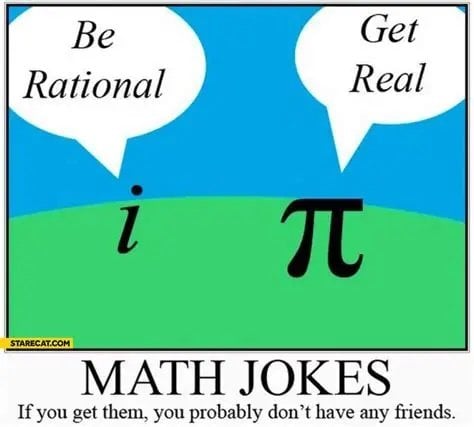
You may be a math nerd, but you're sexy as hell!
Show Results
You can only vote on one answer.
(This is an old post but I thought it might be a good idea to resurrect it today...)
Happy birthday π !

Today (3/14) is π day.

(1) π is equal to the ratio of the circumference of a circle and its diameter.

(2) π is a transcendental number. Briefly, this means that we do not know its value, and we never will, haha. π, you’ll always be a mystery.

(3) π is (most likely) a normal number: the distribution probability of digits within π is random. If we assign a pair of consecutive digits to a character (such as "65"="A", cf. ASCII code table) we will find the contents of each book that has ever been written (even bad books, those behind the front row on our shelves) somewhere along the digits of π, and also any book that has not been written, and all variations thereof. There will be a version of Hamlet where Ophelia is called Helen.

(4) The value of π is more fundamental than the physical constants. If the universe did not exist, the physical constants would loose their meaning, but π would remain the same, indicating that spirit is more fundamental than matter. We, as humans, can change a lot of things, but we can’t change π. Even God cannot change π, sorry Sir, You may have created the world but You did not create π. It’s always been there. And you don't know the value of π either.

(5) π is considered to be one of the five fundamental numbers: i, e, π, 1, and 0. These numbers appear in the famous equation e^(i*π) + 1 = 0 (Gauss? Euler? Don’t remember.)


Happy birthday π!
You’re one of a kind, and we are big fans!

We love you π !
Top | New | Old
JoyfulSilence · 51-55, M
Pi describes circles in flat, Euclidean space.

But what about "circles" on abstract, smooth, 2D manifolds?

That is, pick a point P on the manifold, then plot all nearby points X whose distance from P is equal to a fixed value R, which I will call the "radius".

This assumes, of course, that the distance between P and a candidate point X is well defined. I suppose one could plot all possible paths between P and X, and sum the total distance travelled in the metric indicated by the metric tensor for the manifold. Then take the minimum path length as the "distance". There may be more than one such path, and even an infinite number, but I presume one minimum distance since everything is compact. Such paths, if I not mistaken, are the geodesics (I think a geodesic is defined as the shortest path).

I presume, since things are smooth, that the set of all such X form some sort of curvy loop. At least locally. But would it self-intersect, occasionally? Would it be knotty, or not just a 1D object? Suppose I call the length C of this loop the "circumference".

I suppose one could calculate Pi(P,R) for various combinations of P (center) and "radius" R. Where Pi(P,R) = C/(2R). Assuming C is well defined. I think the smoothness of things may ensure C is. Even with self-intersections.

I do know that as R approaches zero, the manifold approaches Euclidean space (since it is smooth), so Pi(P,R) will approach the normal Pi.

Fun stuff to think about. I have not yet searched for any literature. I have never thought about this before.
@JoyfulSilence Good question!! My sources inform me that
pi appears in non-Euclidean geometry (smooth manifolds) not as the ratio of a circle's circumference to its diameter, but within formulas for area, arc length, and trigonometric angles.

For example, differential geometry introduces the notion of a geodesic -- a shortest path between two points on a manifold -- and pi will come into play calculating the length of the geodesic, taking into account the local curvature of the space.
Pfuzylogic · M
Pi has made me a much bigger person. 😏
of course I chose poll answer #3!
helenS · 36-40, F
@Pfuzylogic Thaaaank you!! 💋
exexec · 70-79, C
I could never have earned my engineering degree without the help of pi.
Punxi · F
Happy 🅿ℹ Day!!

As a chess player the Knight’s Tour (visiting every square exactly once), using statistical mechanics π can appear in formulas describing approximation.
helenS · 36-40, F
@Punxi I didn't know – thank you!
Although I know that π, surprisingly, shows up in statistics formulas, for example, in the area under a Gaussian bell-shaped function.
emmasfriend · 46-50, F
Never thought of it as a date !

All I remember is 3.14159 ......... can't remember the rest.
helenS · 36-40, F
@emmasfriend Nobody remembers the rest, because the rest is infinite. It will never stop. There will always be another digit. It's fascinating. It makes me go nuts.
sarabee1995 · 31-35, F
Love this! I used to be a math nerd too! And I threw a party for π in 2015. Only math nerds know why! 😉
Monalisasmith86 · 36-40, F
@sarabee1995 if you’re a math nerd you wouldn’t party
sarabee1995 · 31-35, F
@Monalisasmith86 Lol, if you think math nerds didn't party, you didn't know many math nerds.

π is ~ 3.1415 so converting those numbers to a date results in 3/14/15. So a π-day party in 2015 was especially special!! 😉
helenS · 36-40, F
Happy pi day!!

My favorite pi approximation: 355/113

FYI, 355/113 - pi is approx 2.66764189x(10^-7)
helenS · 36-40, F
@ElwoodBlues Oh, there is, to the best of my knowledge, no series or sequence which converges to π as a limit rapidly. As opposed to it's cousin e.
@helenS When I read that yesterday, I was vaguely aware of a CPU benchmark program called y-cruncher that calculates digits of pi. I have since gone down a bit of a rabbit hole into y-cruncher! (It might be a lower case gamma, not a y, but everybody just types y. It's a highly parallel algorithm).

First, a few results. The table linked is time to calculate 10 billion digits. https://www.numberworld.org/y-cruncher/benchmarks/charts/10b.html
44.059 sec . . . AMD Epyc 9R14 . . . . . . . 740 GB RAM
56.102 sec . . . Intel Xeon W7-2495X . . . 64 GB RAM

The AMD EPYC 9R14 has 96 cores, 192 threads, and AVX-512 fused multiply-add instructions. The Intel Xeon w7-2495X has 24 cores, 48 threads, and of course AVX-512. AVX-512 allows each core to issue eight parallel double precision (64 bit) floating-point multiply+add instructions every clock cycle. It takes a dozen or more clock cycles for the instruction to complete, but due to pipe-lining, a new instruction can be issued every clock.

Which raises the question: WHAT THE HELLL possible algorithm could calculate TEN BILLION DIGITS of π in UNDER SIXTY SECONDS???

It's called the Chudnovsky brothers algorithm, published in 1988, based on a Ramanujan series. It involves multiplying polynomials, and uses the Fast Fourier Transform in double precision floating point to accelerate those multiplications. y-cruncher was constructed as a highly parallel implementation of the Chudnovsky alg, making best use of available cores and AVX-512 vector math. FFT for accelerating multiplication was as deep as I got in the rabbit hole!! As a benchmark, y-cruncher is considered a test of both floating point math speed and memory speed.


FYI, these folks computed π (pi) to 314 trillion digits in 110 days.
Unlike some previous π record attempts that relied on massive cloud computing resources or distributed clusters, this run was carried out on a single Dell PowerEdge R7725 server by the StorageReview team.

Their system used dual AMD EPYC processors and 40 high-capacity NVMe solid-state drives, 34 of which ran the specialized number-crunching software y-cruncher continuously for roughly 110 days to complete the calculation.
https://tech.yahoo.com/articles/pi-day-breakthrough-obliterates-world-120052525.html
helenS · 36-40, F
@ElwoodBlues Thank you! The only algorithm I know of which calculates an arbitrary amount of digits of π fast, is CORDIC. I would assume that CORDIC (or any variation thereof) is implemented in all pocket calculators currently available.
CORDIC is fascinating; it can be used to calculate not only trigonometric functions, but also hyperbolic, exponential, and logarithmic functions.
Nice mathematical post Helen 👍👍👍
helenS · 36-40, F
@masterofyou Oh thank you so much! I wish there was an e day too...
GoFish ·
ah it's my lil sis' birthday today ☺
Babal · 46-50, M
@GoFish that's a nice gift for sure☺
GoFish ·
@Babal yeah ☺☺☺☺☺
Babal · 46-50, M
@GoFish ☺☺☺☺☺
Babal · 46-50, M
Thanks for an extremely informative post.
Babal · 46-50, M
@helenS thanks a lot for your words and beautiful flowers ☺
helenS · 36-40, F
@Babal Please let me say again you are very welcome!
Babal · 46-50, M
@helenS thanks beautiful
Monalisasmith86 · 36-40, F
3.14 I forgot the sum but now I know again
helenS · 36-40, F
@Monalisasmith86 The sum? What sum?
Monalisasmith86 · 36-40, F
@helenS the sum of pi
Lugwho · 61-69, M
Hsppy pi day math nerd
Lugwho · 61-69, M
@helenS we celebrate it on 22/7 in UK
helenS · 36-40, F
@Lugwho Makes sense, to a certain approximation...
Lugwho · 61-69, M
@helenS Acceptable margin of error
DeWayfarer · 61-69, M
Well, perhaps in an irrational number system there might lay an answer to π.

Yet who is crazy enough to come up with such a irrational number system‽ 🤣

Order comes out of chaos. So chaos could be the answer to π. 😈

Please do not apply chaos theory though. It's not crazy enough. 🤣

https://www.tandfonline.com/doi/full/10.1080/07468342.2023.2265282

🎉🎈🎇 Ⱨ₳₱₱Ɏ 🎆🎈🎊
103993/33102 Đ₳Ɏ!

🎈🎈
🎂
helenS · 36-40, F
@DeWayfarer Oh the article is freely available! Thank you so much!!!
swirlie · 31-35, F
Okay, fine. Knowing all that might actually come in handy someday.

But how would I apply that information to my day to day life or to any part of my life from crib to grave?
helenS · 36-40, F
@swirlie The average Joe (or Jane, for that matter) will probably never need to know anything about the mysteries of π. If, for some reason, you have to calculate the circumference of a circle by using its diameter, a rough approximation such as π=3.14 should suffice for all practical purposes.
But... on the other hand... π definitely exists, and we will never know its true value. Never. And it would exist even if there was no universe. π is a part of the eternal infinite spirit – a spirit which is deeper than the material world.
swirlie · 31-35, F
@helenS
Okay, now you sparked a greater understanding in me when you said Pi would exist even if there was no universe... because Pi is a part of the eternal infinite spirit.

Of all the things I've learned about the eternal infinite spirit, why am I the last one to find out that Pi is a part of that, I wonder?

But on the other hand, if the universe is a mathematical equation at it's root anyway, then I suppose Pi couldn't be anything BUT a part of the eternal infinite spirit, am I right?
ArishMell · 70-79, M
@helenS @swirlieThat's very poetical!
Lilnonames · F
i learned how to divide pie up

helenS · 36-40, F
@CreyvinMoorhead Yeaahhh! 😋
CreyvinMoorhead · 41-45, M

 
Post Comment