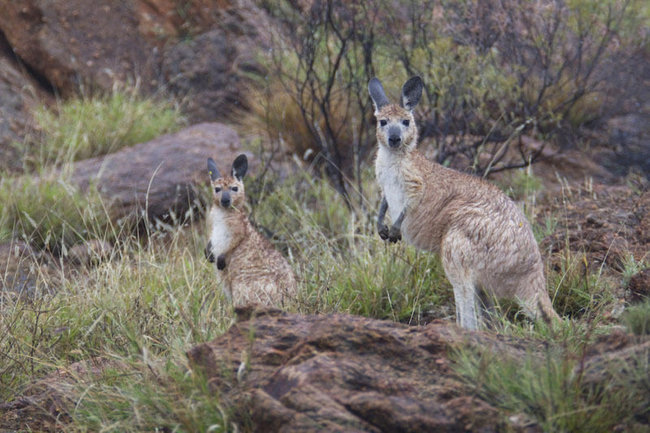
You may believe Australian Kangaroos come in two Types, The Red and the Grey Kangaroos. In fact their are over 50 sub species classified into 3 main groups. Kangaroos, the largest of the Macropods, average male weight, 55 - 90kg Wallaroos, Basically intermediate size Kangaroos that live in Rocky Country, average 35kg Wallabies, medium size Kangaroos, average 25kg.
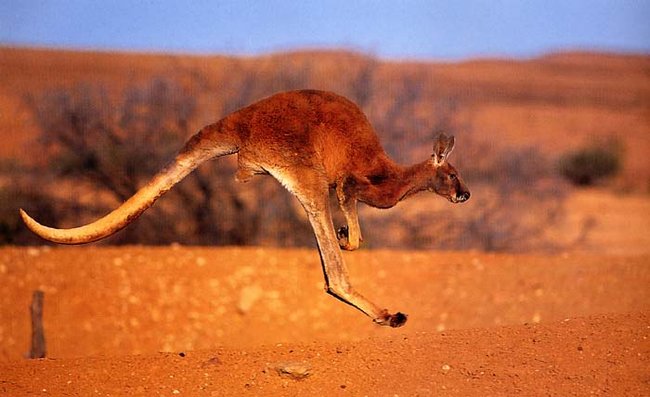
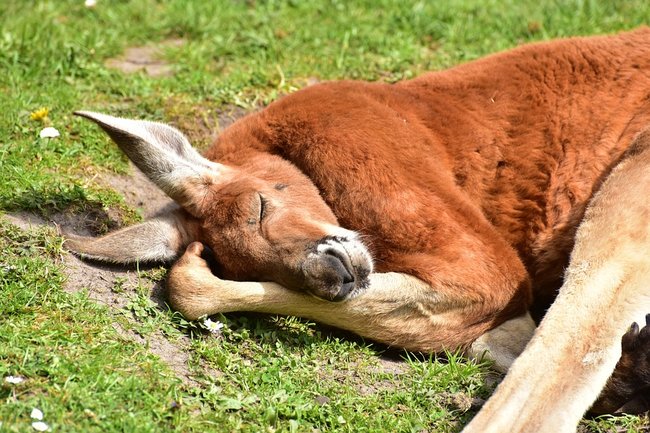
Red Kangaroo The Red Kangaroo is the largest Kangaroo with a body length of up to 1.4m and tail up to 1m. Males tend to be orange red in colouring while females are often blue grey.
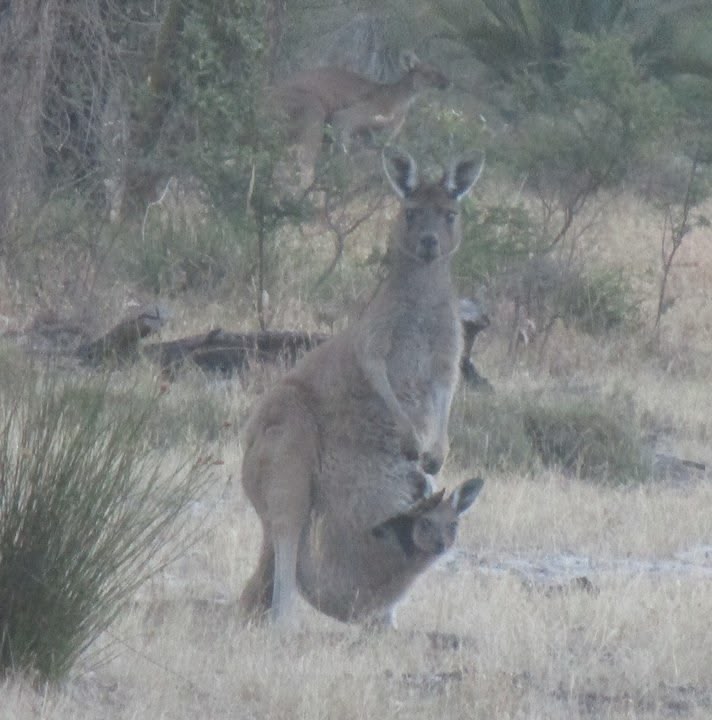
Western Grey Kangaroo All my own Kangaroo photos are Western Greys Found across Southern Australia. Also known as Stinkers, they have a strong odour and are particularly aggressive. Found across Southern Australia. Also known as Stinkers, they have a strong odour and are particularly aggressive.
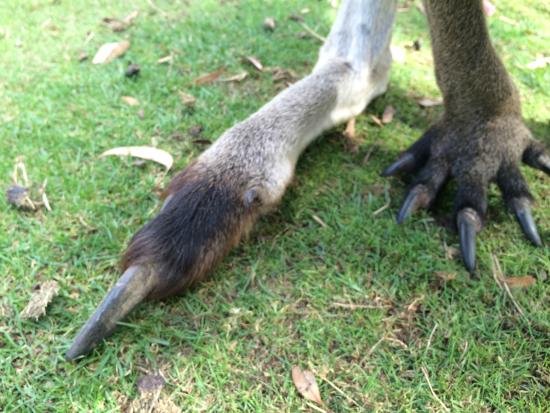
When pregnant the gestation is very short; around one month (33 days). When the peanut-sized joey is born, it is blind and furless. It crawls from the womb to the pouch and attaches to one of four nipples. It will finish developing inside the pouch, whilst suckling milk, for around 9 months. A group of kangaroos is called a mob. The hind feet are extremely powerful enabling travel at speeds as fast as 65kph (40mph).
(my photo)
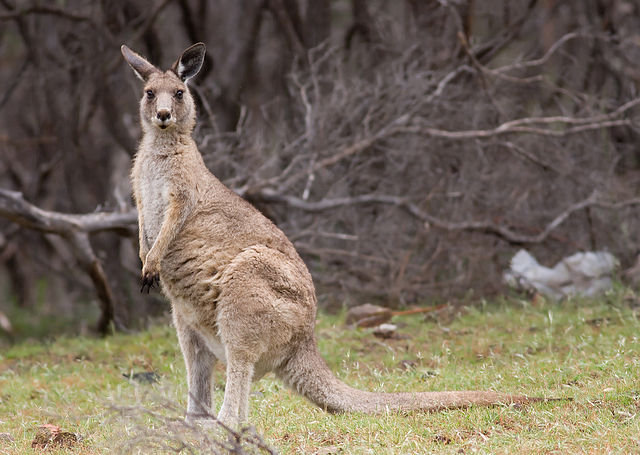
Eastern Grey Kangaroo, ( called Forester Kangaroo in Tasmania) The Eastern Grey is found on coastal plains, the Great Dividing Range and inland ranges where rainfall exceeds 250 mm a year. In Mobs, Males and Females have separate hierarchies.
Wallaby There are 11 species of brush wallabies. Their head and body length is 45 to 105 cm and the tail is 33 to 75 cm long. Here are 4
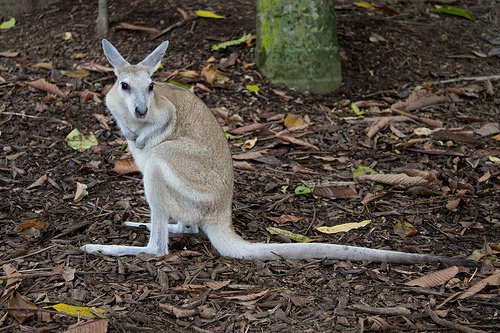
Northern Nailtail Wallaby Sandy coloured fur with dark stripe from mid back to tail.May have palecheeks and hip stripes.
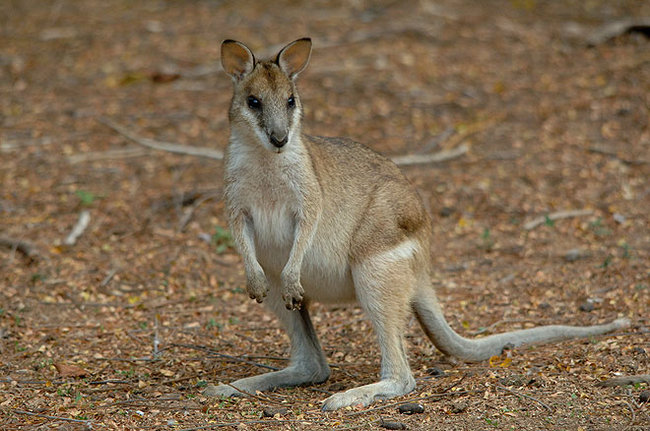
Agile Wallaby This social Wallaby, the most common in Tropical Coastal Australia lives in groups of 10 and several groups will form a mob when feeding
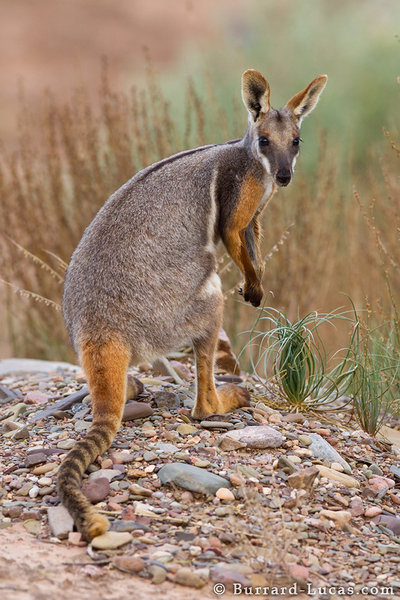
Yellow Footed Rock Wallaby This is the Largest of the Rock Wallabies and is found in semi arid habitats. Most populous in the Flinders Ranges in South Australia
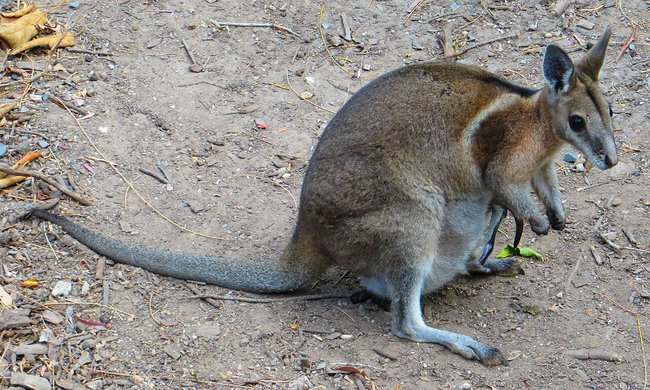
Bridle NailTail Wallaby These shy, attractive Wallabies with their slender faces and distinctive markings were named after the small, horny spur on the end of their tails. When disturbed, the Nailtail Wallaby will drop flat on the ground or crawl quietly back into the scrub.
Wallaroo The word “Wallaroo” is a combination (in both word and meaning) of a wallaby and a kangaroo. A Kangaroo is generally large and slim-bodied. A Wallaby is typically smaller and heavy-set. A Wallaroo is right in the middle.
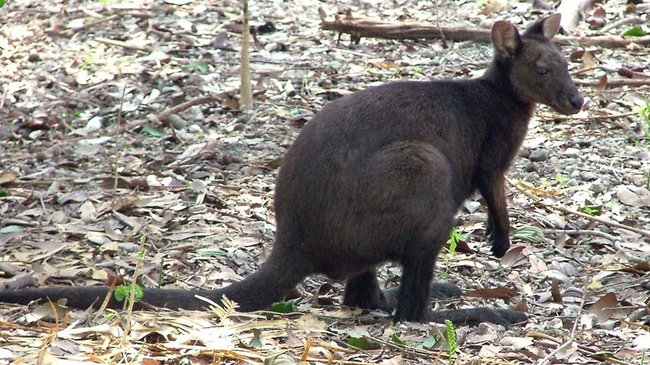
Black Wallaroo This is the smallest and most timid of the Wallaroos. It is found on the Arnhem Land Escarpment and Plateau(Northern Territory)
Common Wallaroo This large, stocky Wallaroo can be found on Escarpments and rocky slopes throughout most of Australia. It is also known as The Euro
Antilopine Wallaroo While this Wallaroo mainly lives in flat or undulating country, it sometimes shares rocky habitats with Common and Black Wallaroos. Lives in groups of 8, but may form mobs of 30 when threatened.
@Gusman When I saw thesephotos , I was looking at the skeletal structure. I have a book here with skeletal structures and the kangaroo skeletal structure, believe it or not, is remarkably similar to the 'humboldt' penguin. Obviously, there is the general difference in size but, nevertheless, very interesting.
@cherokeepatti I have shown but a small number here. I had the marvelous experience whilst camping at Dwellingup to have a Tammar Wallaby come visit me. Yes, the little one stood off at a distance of about 20' but we viewed each other for over 10 minutes.
@cherokeepatti No. Because you can never get close to one. Yes, if for some reason you corner a Kangaroo, which in itself is nigh on impossible then they have the ability to disembowel you with their deadly rear claws.
They ignore you if you keep your distance. They best way to observe Roos is to find a spot in the bush and sit quietly for hours if need be. I often go camping and sit quietly beside a River for hours at a time. Roos pass through. Always stopping to graze. One can not observe Roos by continually traipsing through the bush. Too noisy. One thing to notice is that 90% of the time you notice Kangaroos, they are noticing you. They hear/see you first not the other way around