There is a chance i'll be paying my local food bank a visit, they're only open Noon to 2pm on Tuesdays and Thursdays, and I will need to hear and answer the phone when they call. That's how they roll.
It is possible that most of my posts from here on will be dated, and when I think of something else will be edited in.
Still entrenched in Plato's Charmides, which the Introduction downplayed, saying such things as that the reader ought to be annoyed by Socrates' hair splitting. Now if I had the true soul of a researcher i'd compare that with the Hackett edition of the complete Plato and see if they too downplay it so ruthlessly.
I shall also be proceeding with Diogenes Laertius's Lives of the Eminent Philosophers to hear some tall tales of Thales and those Presocratics, all their works which surviveth not.
5 days till my funds come in, and 6 days till me, brother and dad have a b-day meal, on that day too we'll go to the bottle depot, and i'll hand over some more stuff to sell including the Female Prisoner Scorpion Arrow Video box set, I think 40 dollars would be a fair price to ask for that.
In about 6 hours i'll check the mail, and if my A&W card is in, I'll walk over to my doc, and on my phone i'll go into my Gmail and read from my bro's message on what to say.
All these things a normal person wouldn't think noteworthy enough to share, but I've never really done stuff like this on my own, and so in my mind is extremely noteworthy, walking over to my doc is almost like a successful business person becoming an astronaut!!
Aristotle's De Interpretatione is relatively short, could come to the finish line there before Charmides. And for sure Aristotle's surviving corpus is larger than Plato's.
Discourse 1.26 of Epictetus down the hatch!!
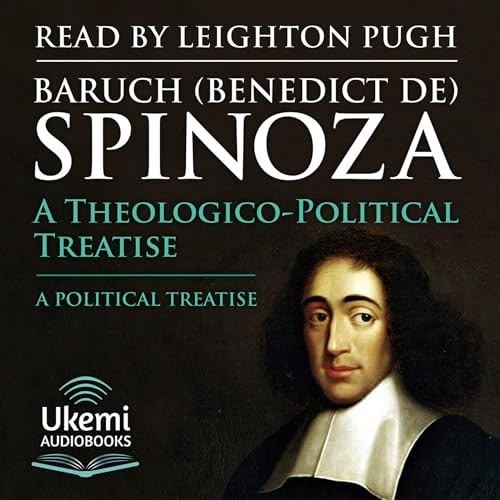
7:15am -- going in for a Portable Nietzsche dip. 7:53am -- Smoking my last joint 8:05 -- Bhagavad-Gita for Daily Living Ch.2 Self Realization - verses 58-61 -- some thoughts in here are good for saving money, not being so materialistic, having possessions to unnecessary excess .... managing and overcoming cravings, which would be useful for food and nicotine, THC maybe too, but I like feeling high, but the thing with these kinds of teachings that it also for me at least seems to be saying you don't need that, and behaving as if you needed it, you go against what is of sensible thinking. And then when one is free of those toxins both material and immaterial would offer higher highs, you would think, but a high you don't chase after, but it just happens naturally. 8:32 -- A Theologico-Political Treatise -- this is what the Dutch Calvinists hated so much, this was The God Delusion of the 1600s!!
9:08 -- 3. Fractures from Anathemas and Admirations 9:30 -- a Renewing Your Mind episode 10:00 -- Thought Stillness and Time: Six Small Group Discussions, Gstaad, Switzerland, 1965 -- Krishnamurti, I have a whole bunch of these on Audible, stillness is the main thing for the Hesychists who are the main contributors in The Philokalia.
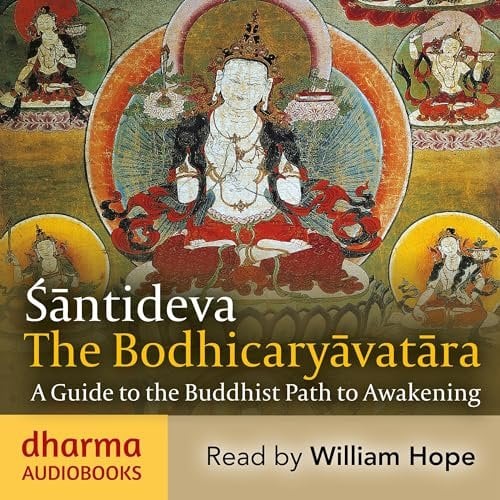
10:40 -- and I have to pick one of the Dharmaudiobooks to listen to from the beginning to end before picking another, I did go on a spree with them a few months ago, so this looks like a good place to begin a methodical way of going through them:
Written in India in the early eighth century CE, Santideva's Bodhicaryavatara takes as its subject the profound desire to become a Buddha and save all beings from suffering. The person who enacts such a desire is a Bodhisattva.
Santideva not only sets out what the Bodhisattva must do and become; he also invokes the intense feelings of aspiration which underlie such a commitment, using language which has inspired Buddhists in their religious lives from his time to the present.
Important as a manual of training among Mahayana Buddhists, especially in the Tibetan Buddhist tradition, The Bodhicaryavatara continues to be used as a basis for teaching by modern Buddhist teachers. His Holiness the Dalai Lama frequently cites passages as his highest inspiration.
In this recording, William Hope first of all reads the work in its entirety so that the listener can gain an overall perspective and emotional engagement with the text and then embarks on the 'study' section, where the translators introduce each chapter, making crucial helpful points.
Translated with introductions and notes by Kate Crosby and Andrew Skilton. With a general introduction by Paul Williams.
11:05 -- And then one of my favorite books!!
Assembled from notes and jottings left unpublished at the time of the author’s death, The Book of Disquiet is a collection of aphoristic prose-poetry musings on dreams, solitude, time and memory. Credited to Pessoa’s alter ego, Bernardo Soares, who chronicles his contemplations in this so-called "factless" autobiography, the work is a journey of one man’s soul and, by extension, of all human souls that allow their minds and hearts to roam far and free.
Though his outward life as an assistant bookkeeper in downtown Lisbon is a humdrum affair, Soares lives a rich and varied existence within the contours of his own mind, where he can be and do anything. Soares has no ambition, nor has he any friends; he is plagued with disquiet, and only imagination and dreams can conquer it.
Compiled by the translator Richard Zenith, Fernando Pessoa’s The Book of Disquiet is a fulgent tribute to the imagination of man. Translation by Richard Zenith.
11:20 -- And then I gotta put this into the mix, the end is nigh list means listen to the best of the best!!
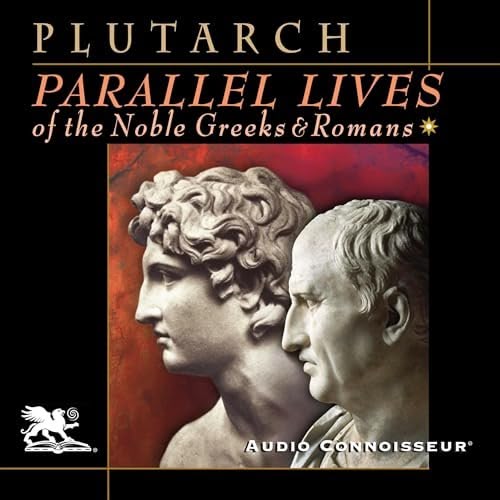
12:15 -- And then this 1. Theseus 2. Romulus 3. comparison .... no A&W card in the mail, so I'm just gonna keep up my audiobooks till my wake period comes to a close in about 6 hrs from now.