I call it false advertising
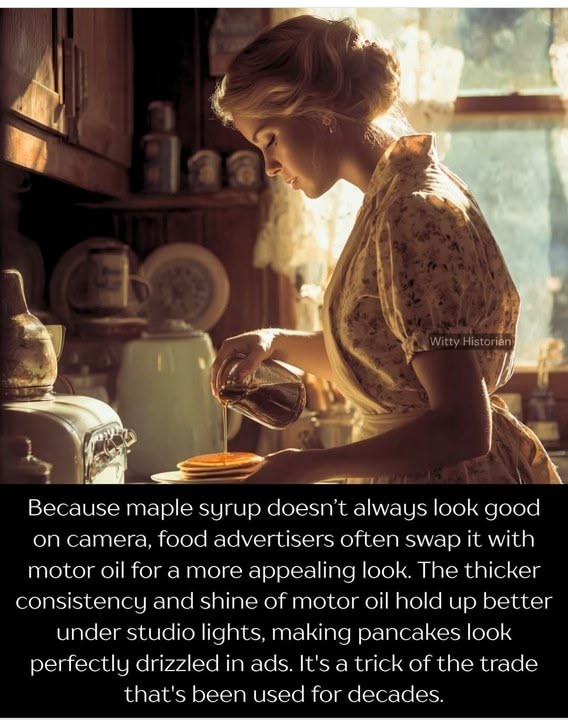
This isn’t the only deception used in food advertising. Photographers have used mashed potatoes as stand-ins for ice cream, glue instead of milk in cereal, and even sprayed burgers with browning agents to enhance their appeal. These methods, while misleading, became standard practice as food styling grew into a professional field. The aim wasn’t to serve real food, but to sell a craving, a feeling of satisfaction that images alone had to deliver.
While these techniques raise ethical questions, they reflect a larger history of visual manipulation in advertising. As television and print media grew in the mid-1900s, so did the pressure to make food products look irresistible. Today, even with digital editing, many old-school tricks like motor oil are still used because they work. Next time you see a perfect pancake ad, just remember—it might be running on more than maple.
#FoodHistory
#Advertising
#WittyHistorian