
The $1.5 trillion problem with AI – most companies’ data is so disorganized and unreliable that AI can’t deal with it.
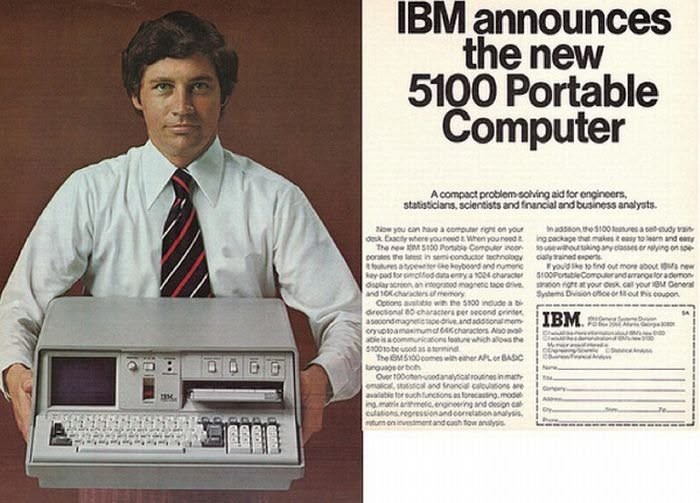
Photo above - the ground-breaking IBM 5100 personal computer from the late 20th century. For $19,975 you got 64 KB of ram (kilobytes, not megabytes or gigabytes) Evidently 21st century AI systems are having difficulty digesting corporate data from legacy systems.
900+ companies were surveyed (see MSN link below). Half said their AI related expense savings amounted to only 10% or less of projections. The culprit: bad data. Data which slumbers in dozens of disconnected, disorganized files run under legacy code. “Garbage in, garbage out”, anyone?
The classical view of computing is “input – process – output”. The current AI environment is “poor quality input - processed by code which hallucinates - resulting in output which requires massive review and correction by meat and bones workers.” Who DIDN’T see this coming?
Well the companies selling AI systems didn't tell us about it of course. They’re under no obligation to alert clients to problems like this. AI isn’t like the automotive industry, where the Honda Ridgeline (the most reliable pickup truck of all time, according to experts) , has been recalled 14 times for different issues. If a law was passed which required faulty AI systems to be recalled, the entire artificial intelligence house of cards might collapse. AI developers expect us to simply walk away from Claude 1, Claude 2, Claude 2.1, Claude 3.0, Claude 3.5, Claude 4 and Claude 5 and purchase an updated version. Suppose the old versions had to be fixed, under some sort of warranty agreement?
Back to corporate AI clients. They probably won’t have grounds for a lawsuit simply because expense reductions (fuel economy) were only 10% of what they imagined. Some clients themselves probably knew much of their internal data was complete garbage. Developers and clients assumed AI was so smart that it would immediately fix decades of bad data upon boot-up.
A friend of mine works on Wall Street. She’s “training” AI to perform some of her functions. Or possibly all of them - the company is vague about where this is headed. The training is not going well. There is customer data from a half dozen nations. Those nations all have different privacy laws, tax laws, and regulatory reporting requirements. And that's before one even considers whether the data – going back years – is even accurate. A bunch of it was entered through keyboards. A bunch of it was concocted to meet quarterly performance goals. My friend is becoming increasingly nervous that she will be blamed if the AI training does not go as planned.
AI spending is “only” a $1.5 trillion problem right now. By 2030, it’s projected to reach $5-$6 trillion - 4X as much. It’s entirely possible that one of the upcoming new AI releases will contain magical lines of code with correct years of typos, fudged data, and can decipher all those various international laws. Or it’s possible that AI performance and expense reduction goals will remain elusive.
I’m just sayin’ . . .
New survey says AI is falling woefully short on one big promise — it 'should be making executives uncomfortable'
https://www.msn.com/en-us/money/other/new-survey-says-ai-is-falling-woefully-short-on-one-big-promise-it-should-be-making-executives-uncomfortable/ar-AA24E7Qa?ocid=msedgntp&pc=HCTS&cvid=6a1ff67a138642b38a8e6ef9b0a026cf&ei=59
Gartner Says Worldwide AI Spending Will Total $1.5 Trillion in 2025
https://www.gartner.com/en/newsroom/press-releases/2025-09-17-gartner-says-worldwide-ai-spending-will-total-1-point-5-trillion-in-2025


