Report says California’s bond debt load exceeds $99 billion
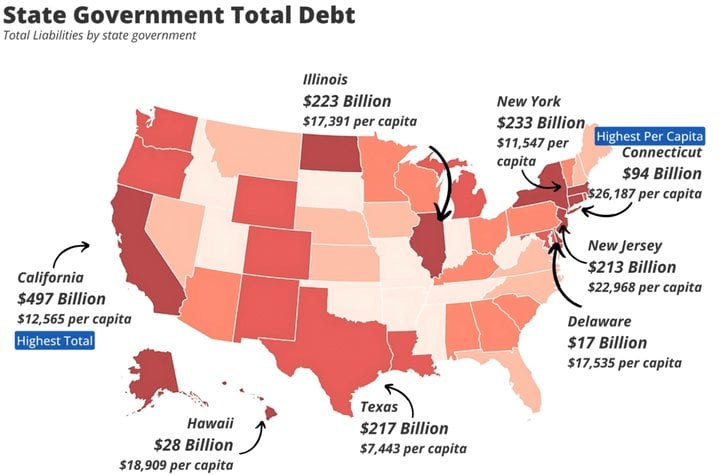
Amid a projected $18 billion budget shortfall for the 2026-27 fiscal year, the state is also dealing with $99.1 billion in bond debt, according to a new report.
The report released by the California Debt & Investment Advisory Commission shows that the state and local debt load sits at $99.1 billion, and long-term debt across the state makes up $90.1 billion. That debt load is up 11.6% over the five-year average, the report states, and is up 8.8% year-over-year.
“I always say the insidious thing about taking a loan out is that you’ve got to pay it back,” state Sen. Roger Niello, R-Roseville and vice chair of the Senate Budget and Fiscal Review Committee, told The Center Square on Monday. “I tend to be very conservative on that because of that fact that you have to pay it back. If there’s any part of today’s budget difficulties that are motivating us to go to the bond market to help pay for things that the general fund can’t, that’s a huge mistake.”
An additional $7 billion in debt has been proposed statewide, according to the report. Local governments in California, additionally, have taken on $71.3 billion in local debt. That is driven, in large part, by the energy sector, the report states.
Electricity demand increased significantly between 2021 and 2024 in places where artificial intelligence data centers were built or expanded, according to the report. Debt issuance went up by 30% in that time, mostly to help pay for supporting electric systems, renewable energy projects and grid modernization.
Government-run joint power authorities that help supply energy to private electrical companies took on the most debt in that time period. Approximately 40% of the electricity consumed by private utility companies is purchased through these agencies, and those agencies are able to get tax-free bonds to help pay for increased electricity infrastructure to meet the higher demand generated by AI data centers, according to the report.
Those bonds essentially pre-paid renewable energy for customers of these agencies for the next 30 years, the report states.
“My first impression is that we’re kicking off our problems to the future,” said Wayne Winegarden, a senior fellow in business and economics at Pasadena-based Pacific Research Institute.
This page is a permanent link to the reply below and its nested replies. See all post replies »
@jackson55 Meanwhile, Texas local government bond debt has surged to nearly $552 billion as of fiscal year 2025, driven largely by school district construction and infrastructure projects.
As of late 2025, Florida's total state and local government debt was approximately $241.6 billion, according to analysis from the Reason Foundation.
Suddenly, California sounds pretty good, doesn't it??
@ElwoodBlues No, because California still has the highest taxes and fees of any state. Now they want to add a per mile fee to all vehicles, and another $352 to renew your vehicle as of July 1. Texas sounds pretty good.