
Some information about the First Crusade
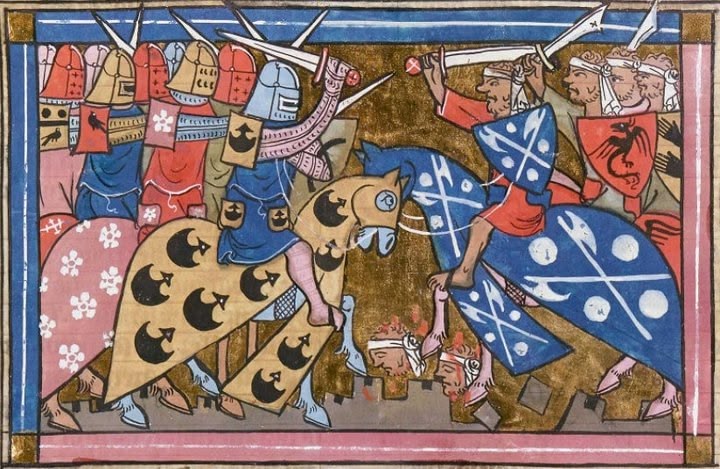
By the late 11th century, the development of Christian just war theory, increasing aristocratic piety, and the popularity of penitential journeys to the Holy Land created a context for armed pilgrimages. Strengthened by the church reforms, the papacy was well positioned to channel anxiety over sin and hopes of remission into a papally orchestrated war. In 1074, Gregory VII was the first pope to plan a campaign against the Turkomans, though it was never launched. In March 1095, his successor, Urban II, received envoys from Emperor Alexios I Komnenos, who requested military aid at the Council of Piacenza.
By this time, the Seljuk Empire had descended into civil war following the deaths of Vizier Nizam al-Mulk and Sultan Malik-Shah I in 1092. Malik-Shah's brother Tutush I contested the succession of Malik-Shah's son Berkyaruq. Although Tutush was killed in battle in 1095, his sons Ridwan and Duqaq, seized control of the Syrian cities of Aleppo and Damascus, respectively, while Tutush's former mamluk (slave soldier), Yaghi-Siyan, maintained his rule over Antioch. In Anatolia, the breakaway Seljuk prince Kilij Arslan I founded the independent Sultanate of Rum, while an autonomous Turkoman clan, the Danishmendids, seized control of the north.
Meanwhile, Fatimid Egypt faced its own succession crisis after the deaths of Caliph al-Mustansir and his vizier al-Jamali. Al-Jamali's son and successor al-Afdal Shahanshah installed al-Mustansir's youngest son al-Musta'li as caliph bypassing the eldest son Nizar. Although Nizar was murdered, his supporters rejected al-Musta'li's legitimacy and established a new branch of radical Shi'a Islam—the Nizaris, also known as the Assassins.
In July 1095, Pope Urban began a tour of France, negotiating with local elites, and ending with the Council of Clermont. Here, on 27 November, he announced a military campaign against the Turkomans. According to most accounts, he urged military support for eastern Christians, promising spiritual rewards, and condemning knightly violence. Accounts differ on whether he promised reduced penance or full remission of sin. Urban's appeal reportedly prompted the crowd to cry Deus vult! ('God wills it!'). The ritual of "taking the cross" was introduced on the spot, with Bishop Adhemar of Le Puy setting the precedent. He was soon appointed papal legate.
Urban held further councils in France, and set 15 August—two weeks after the harvest began—as the campaign's start date. His message spread mainly through those present at Clermont, leaving much of Western Europe unaware of the crusade. He also urged Catalan counts not to join, granting them equal spiritual rewards for fighting the Almoravids, marking an early instance of crusading in Iberia.
