Since I am almost eight weeks pregnant I am a stickler for considering what to expect.
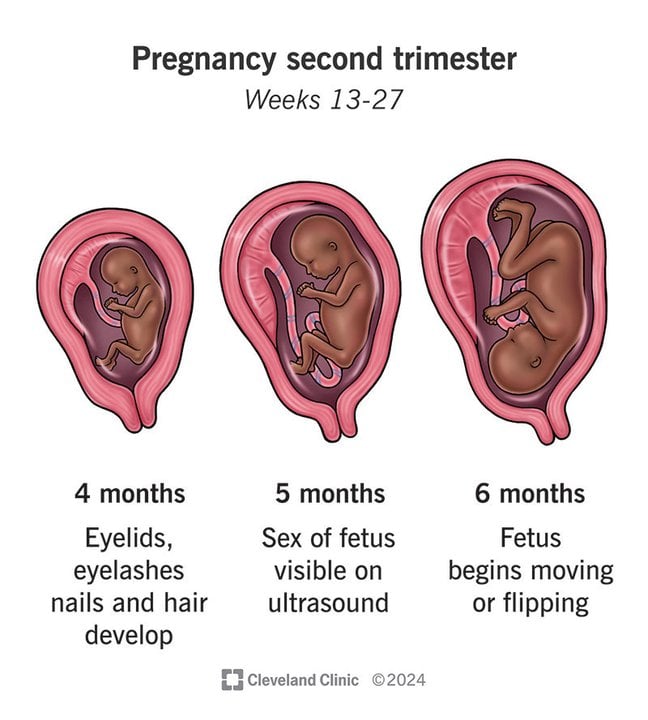
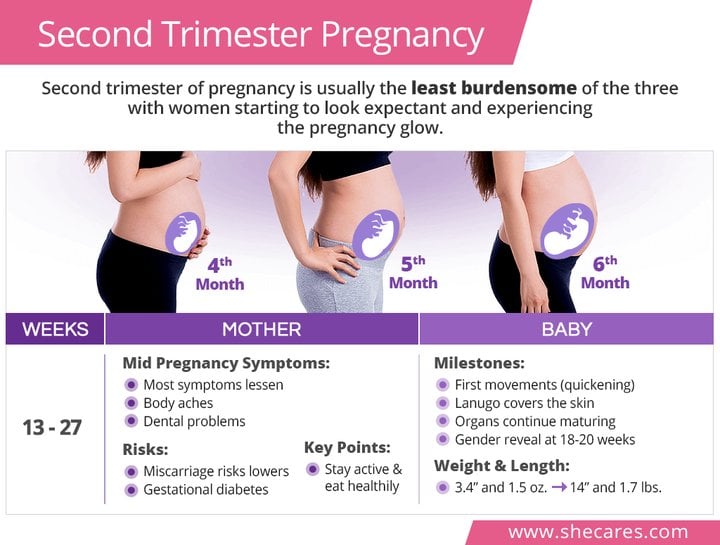
The second trimester of pregnancy (weeks 13-27) is often considered the most comfortable, as early symptoms like morning sickness and fatigue usually ease, giving way to more energy and a growing baby bump.
During this time, you'll feel the baby move, experience physical changes like stretch marks and heartburn, and undergo important ultrasounds, while the fetus develops features like hair, nails, and stronger organs.
What to expect in your body Improved Energy: Morning sickness often subsides, increasing energy levels.
Growing Bump: Your uterus expands, making your pregnancy more visible and potentially shifting pressure off your bladder.
New Aches: Back pain, round ligament pain, and pelvic girdle pain can occur due to weight gain and posture changes.
Skin & Hair Changes: You might notice stretch marks, darker skin on your face (chloasma), or oilier skin.
Digestive Issues: Heartburn, bloating, and constipation can become more common as the uterus presses on your digestive system.
Baby's development Movement: You'll start feeling the baby move (<<"quickening") between 16 and 24 weeks, with movements becoming stronger.
Physical Growth: The fetus develops hair, nails, and more defined facial features.
Organ Maturation: Focus shifts to internal organs, immune system, and nerve development.
Senses: The inner ear bones harden, allowing the baby to hear sounds.
Key activities & check-ups Mid-Pregnancy Ultrasound: A detailed scan checks the baby's development and confirms the sex.
Get Active: Light exercise like walking or swimming can help, but avoid high-risk activities.
Bonding: Feeling movements helps you bond, and you may start thinking about life as a parent.
Know Your Warning Signs: Contact your midwife or doctor for decreased fetal movement, signs of infection (like toxoplasmosis from cat litter), or severe pain.