


This page is a permanent link to the reply below and its nested replies. See all post replies »

nudistsueaz · 61-69, F

@nudistsueaz
1. Is he “backing down”?
In a legal sense: Yes
He sought to do X (use the National Guard in states over objections).
The Court said no legal authority.
He stopped doing X.
That is the textbook definition of backing down: ceasing a course of action after being blocked by a superior authority.
California’s governor’s office captured this bluntly as “you can’t fire me, I quit”
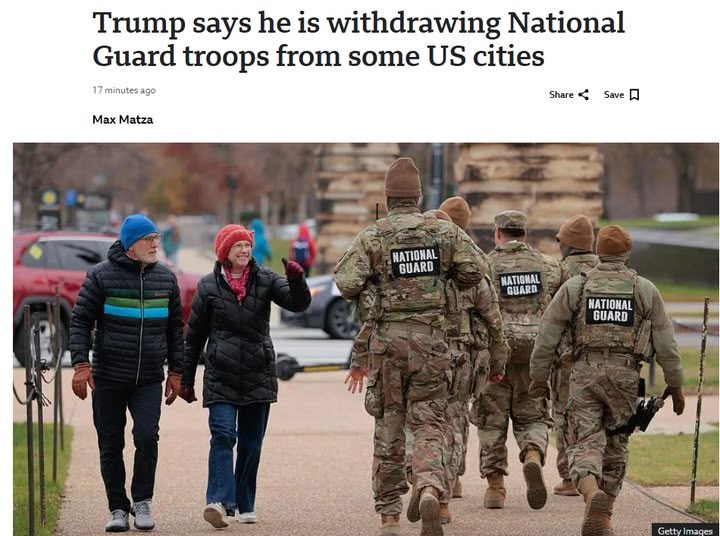
TRUMP NATIONAL GUARD
.
2. Is he “just changing the method”?
This is where the counter-argument overreaches.
Some supporters argue:
“He isn’t backing down—he can just use active-duty Army or Marines instead.”
That claim has three major problems:
(1) The Court did not invite a workaround
The ruling did not say:
“Use active-duty forces instead.”
It said the administration failed to identify any lawful authority for using the military to execute domestic law in Illinois. Switching uniforms does not solve the legal defect.
(2) Active-duty troops face more, not fewer, constraints
Deploying Army or Marines domestically triggers:
The Posse Comitatus Act
Even stricter constitutional scrutiny
Far higher political and institutional resistance inside DoD
If the Guard couldn’t be justified, active-duty troops are harder, not easier, to justify.
(3) Trump’s own language signals retreat, not escalation
Trump said:
“We will come back, perhaps in a much different and stronger form… Only a question of time!”
TRUMP NATIONAL GUARD
That is future conditional rhetoric, not present action.
Politicians escalate immediately when escalation is real. This was face-saving language.
3. The most accurate formulation
If you want a precise, defensible sentence that avoids spin on either side:
Trump backed down in the immediate sense because the Supreme Court blocked his legal authority, but he is rhetorically preserving the option of future escalation if circumstances—or legal theories—change.
That formulation:
Acknowledges the Court’s constraint
Rejects the fiction of a simple “method change”
Recognizes Trump’s habitual use of forward-looking threat language
4. Bottom line
Legally: He lost and complied → backing down
Strategically: He’s signaling defiance for later → political theater
Factually: There is no automatic, lawful “Army/Marines switch” waiting in the wings
So when someone says “he’s not backing down”, what they really mean is:
“He doesn’t want to admit defeat, even though the courts forced one.”
That’s a political posture—not a legal reality.
1. Is he “backing down”?
In a legal sense: Yes
He sought to do X (use the National Guard in states over objections).
The Court said no legal authority.
He stopped doing X.
That is the textbook definition of backing down: ceasing a course of action after being blocked by a superior authority.
California’s governor’s office captured this bluntly as “you can’t fire me, I quit”
TRUMP NATIONAL GUARD
.
2. Is he “just changing the method”?
This is where the counter-argument overreaches.
Some supporters argue:
“He isn’t backing down—he can just use active-duty Army or Marines instead.”
That claim has three major problems:
(1) The Court did not invite a workaround
The ruling did not say:
“Use active-duty forces instead.”
It said the administration failed to identify any lawful authority for using the military to execute domestic law in Illinois. Switching uniforms does not solve the legal defect.
(2) Active-duty troops face more, not fewer, constraints
Deploying Army or Marines domestically triggers:
The Posse Comitatus Act
Even stricter constitutional scrutiny
Far higher political and institutional resistance inside DoD
If the Guard couldn’t be justified, active-duty troops are harder, not easier, to justify.
(3) Trump’s own language signals retreat, not escalation
Trump said:
“We will come back, perhaps in a much different and stronger form… Only a question of time!”
TRUMP NATIONAL GUARD
That is future conditional rhetoric, not present action.
Politicians escalate immediately when escalation is real. This was face-saving language.
3. The most accurate formulation
If you want a precise, defensible sentence that avoids spin on either side:
Trump backed down in the immediate sense because the Supreme Court blocked his legal authority, but he is rhetorically preserving the option of future escalation if circumstances—or legal theories—change.
That formulation:
Acknowledges the Court’s constraint
Rejects the fiction of a simple “method change”
Recognizes Trump’s habitual use of forward-looking threat language
4. Bottom line
Legally: He lost and complied → backing down
Strategically: He’s signaling defiance for later → political theater
Factually: There is no automatic, lawful “Army/Marines switch” waiting in the wings
So when someone says “he’s not backing down”, what they really mean is:
“He doesn’t want to admit defeat, even though the courts forced one.”
That’s a political posture—not a legal reality.

nudistsueaz · 61-69, F
@FrogManSometimesLooksBothWays So wrong, sorry you don't understand the ruling.
@nudistsueaz I'm just a small-brained liberal. Sorry.

Midlifemale · 61-69, M
@FrogManSometimesLooksBothWays I would add a lot more adjectives to describe your small liberal brain after reading all that you wrote to describe the actions of our great hard working president
This message was deleted by its author.
nudistsueaz · 61-69, F
@FrogManSometimesLooksBothWays Oh I get that. Don't feel to bad, your not alone.