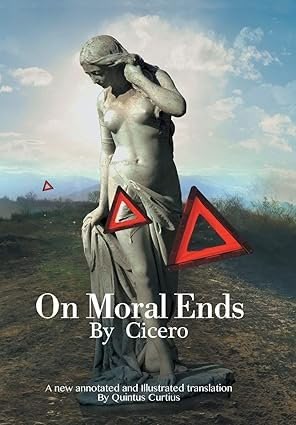
This will be a most enlightening read that I will prioritize
Cicero's body of work, for me is only beginning to be navigate-able, and to seek out good modern translations is a good thing to be doing, even though my chosen professor says not to be all hung up on which translations are best, it remains ideal to be given the goods with such things as supplemental material. This work gives good accounts of the 3 leading schools, and can help fill in the gaps for those times periods which have been lost. His On Duties draws on his in person teacher who was a prominent middle period Stoic, Panaetius (might have spelled that wrong). I hope in a month or so, i'll have a pretty good idea of a top 10 works of Cicero that most meets my interests, so there will be a lot of speeches and ancient Roman political things, which I must say now it seems more interesting, but for such a long time it didn't appeal to me at all, and that is why this remarkable guy Cicero is only now making my time whiz by like a turbo charged chariot of fire!!
This new and original translation of Cicero's "On Moral Ends" (De Finibus) contains numerous unique features that make it ideal for the motivated self-learner or for classroom use. Fully self-contained, it is designed both for the serious student and for those who have no prior background in classical studies. Special features include the following:
1. A clear, modern, and accurate translation gained from intensive study of the Latin text.
2. Sixty-five (65) original photographs, taken by the translator, of the actual locations where the dialogues took place in Italy and Greece (Cumae and Tusculum in Italy, the Platonic Academy in Athens, and other historical sites in Athens). These photos enhance comprehension and appreciation of the text.
3. Over four hundred sixty scholarly footnotes that explain every name, concept, and detail needed for comprehension.
4. Detailed topical organization table for easy, fast location of topics and issues.
5. Detailed descriptive index.
6. Extended introduction that explains the author's life and works, the organization and layout of the text, and summaries of the three philosophical systems discussed by Cicero.
7. Commentaries at the end of each of the five books that assist the reader in understanding the text.
The essential question asked in "On Moral Ends" is this: what is the ultimate end or goal of human life that provides us with a rational plan for living? In a series of stimulating dialogues, Cicero examines three philosophical systems and attempts to arrive at a theory of ethics to govern life. In so doing, he eloquently voices his surpassing belief in the power of wisdom, nature, and the human soul. Until now this essential work has not been as accessible to the modern reader as it should be. This is a translation for the new millenium, and seeks to make the text accessible to a new generation of readers.
Quintus Curtius is a translator, writer, and attorney. He has previously translated Cicero's "On Duties," "Stoic Paradoxes," as well as the works of the Roman historian Sallust. He can be found at www.qcurtius..com.
This page is a permanent link to the reply below and its nested replies. See all post replies »
I've seen a few mentions of what is the meaning of life. I don't think the universe is a conscious thing that it would build a meaning into life. We are conscious though and have the raw materials. We might be able to ourselves reason out some kind of prefered set of choices that will create something meaningful with regard to our unique nature and the laws of the universe. At least as best we can understand them.