Asking
Only logged in members can reply and interact with the post.
Join SimilarWorlds for FREE »

Price controls on insurance. $50 billion in homeowners’ savings, or does history show that something worse happens next?
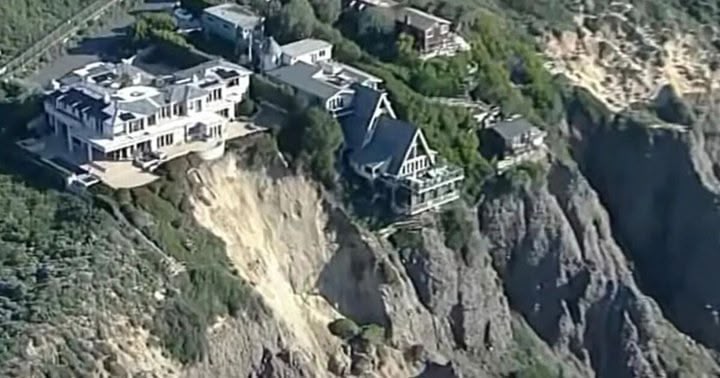


Photo above – California beachfront living could get more affordable if the new governor caps insurance rates. Or will price controls mean California houses like these tumble into the sea even faster, or disappear in wildfires?

Forget the republican (Steve Hilton, former Fox news host) who momentarily held the polling lead for California governor a week or so ago. New polls immediately appeared showing Xavier Beccera (Democrat, Stanford Law grad, former US secretary of HHS) is now the man to beat. Wait, that’s wrong. There IS one woman among the 8 candidates but she’s polling in single digits.

How did Xavier Beccera bound into the lead? By promising to "resist Trump”, and more importantly to “investigate the state insurance commissioner if he doesn’t immediately cap insurance rates." But Investigating and intimidating other politicians does sound Trumpian, and not at all like resisting Trump. (see the link below).

Since the average homeowner in California only pays $1,600 annually for insurance, these price controls are intended to beguile rich voters with expensive mega mansions, clifftop coastal views, and off-grid homes nestled deep in brushfire areas. Government assistance to the rich, who could be grateful on election day.

But there’s a problem. Evidently California law does not allow the governor to set price controls – yet – on anything. Not on electric rates, home insurance, car insurance, property taxes, gasoline prices, or Subway foot longs. So this insurance rhetoric is probably just the usual campaign BS which will be discarded the day after the election.

The bigger problem: if some politician DOES manage to set price controls on insurance, those companies will quickly cease doing business and exit the state. Much like California corporations are migrating elsewhere over taxes and crime. Xavier Beccera would need to institute an insurance company “exit fee”, like the one already proposed for rich guys, to keep them from heading to the door. Exit fees are also considered unconstitutional.

I feel California’s pain – both the candidates’ and voters’. The golden state is the most expensive place in America. It's probably impossible to raise sales taxes any mores (12% in some places) or increase state income taxes. But creative ideas continue to pop up. There’s a 1% “mental health” tax surcharge which took effect on in January, so you never know what politicians could dream up next. Or even if a 1% mental health tax curbs risky behavior and reduces fentanyl use.

Today’s column is NOT an attack on Xavier Beccera, who might be the most qualified candidate in the governor's race. At least far as credentials go. But with an elite college law degree also comes great legal responsibility, Xavier. You already know that price controls can’t work. Stop fibbing just to win the election.

I’m just sayin’ . . .


Xavier Becerra's big California insurance plan sounds unconstitutional | Analysis


https://www.msn.com/en-us/money/insurance/xavier-becerra-s-big-california-insurance-plan-sounds-unconstitutional-analysis/ar-AA23vczt?ocid=msedgntp&pc=HCTS&cvid=6a0c31873b984e7dae35a181ef4bc017&ei=33
Top | New | Old
ArishMell · 70-79, M
I can see the insurers getting round that by increasing the rates and the exclusions for everyone else.

To be fair to them, if were an insurer I would refuse storm, subsidence and collapse cover on those homes in the photograph, at least if they were that close to a clearly weak cliff when they were built. Certainly now; and I think many insurers might condemn as uninhabitable the one on the left. I don't know the planning laws there but am suprised they were permitted.

Why storm damage? Prolonged heavy rain and/or storm waves on a very exposed oceanic coast would greatly increase the landslip risk, or indeed trigger more slides. The cliff appears to be in a deep bed of sandy clay or similar soft rock, ripe for rapid erosion.


There are homes in the N.E. England that have had to be evacuated and demolished, because although originally a little way inland, and the cliffs are very low, the coast is eroding so rapidly the buildings would soon have collapsed onto the advancing beach.


Whether capping premiums would do anything useful is another matter, bound up with the State's legal and economic conditions only the Californians can sort out; but to expect to insure homes in that situation against loss by coastal erosion would be remarkably naive.
Pretzel · 70-79, M
I suspect insurance companies will just stop offering insurance where they can't make enought to cover their payouts.

They are used to making money.

We had that problem in Florida even without the caps on rates. A few hurricanes back to back with billions in payouts - and they cancelled a ton of policies.
Crazywaterspring · 61-69, M
They don't have a state agency that sets rates? $1600 annual property insurance is cheap. Insurance is much higher in FL and TX.
exchrist · 36-40
Increasing taxes cannot be the only means to balance the budget. Taxpayers will simply go (move) elsewhere.
Specifically cost savings and revenue generation are the other two tried and true strategies. For example
Efficiency/sufficiency and production
SusanInFlorida · 31-35, F
@exchrist fully agree. but i struggle to find ANY examples of a federal or state budget which spent less money than it did the year before. politicians bake in inflationary spending increases, as well as new programs promised during election campaigns.

its much easier to start a program boondoggle than stop it.

this is why a B-21 bomber costs $2 billion each
exchrist · 36-40
@SusanInFlorida the mayor of various cities have balanced a budget in order to pay off a municipality’s debt. Efficiency. Cost savings. It is all about scale. Cities towns counties can budget and acheive savings. Too big to work continues to be unsustainable states countries alliances (especially at continental and global scale) continue to be infeasible).
Remember to big to fail? It’s actually too big to work!
At a local level pros/cons can be played to for financial incentive and economic advantage
Capitalism is about competition, America has made capitalism about exclusion (cornering a market), discouraging competition, and economies of scale. Plus tax avoidance.
exchrist · 36-40
@SusanInFlorida debt payments being the main culprit the state or federal budget spent less but all cost savings goes to debt payments. Until debt is paid. No reduction in spending can be recorded all cost savings goes to debt payments.
FreddieUK · 70-79, M
As an observer, rather than participant in US politics, I think this is a very fair and balanced comment which (unlike so many) sees nuance and complexity in the issues facing politicians trying to represent a wide constituency with differing demands.
So the insurance companies will simply refuse coverage, as they have in Florida..😷

 
Post Comment
