


This page is a permanent link to the reply below and its nested replies. See all post replies »

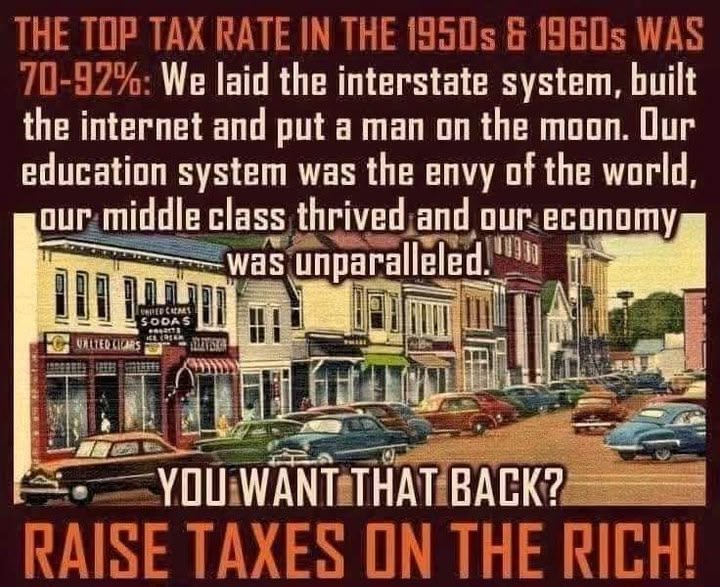
The meme mixes one accurate fact with a misleading implication. The top marginal tax rates in the United States really were extremely high in the mid-20th century, but the relationship between those rates and the achievements listed is more complicated than the image suggests.
1. The historical tax rates are correct.
During the 1950s the top federal income tax rate reached 91%, and in the 1960s it was around 70% after the Kennedy tax cuts. But this was a top marginal rate, meaning it applied only to income above a very high threshold. Most taxpayers never came close to it.
2. Few people actually paid anything close to those rates.
Because the tax code then contained many deductions, shelters, and exclusions, wealthy taxpayers often paid effective rates far lower than the statutory top rate. In other words, the number looked huge on paper but was not always what people actually paid.
3. Many of the accomplishments listed were funded through broader factors.
The meme credits high taxes on the rich for:
the interstate highway system
the moon landing
the growth of the middle class
a strong education system
Those developments were influenced by multiple forces, including:
enormous post–World War II economic growth
the U.S. being the only major industrial power not devastated by the war
very strong labor unions
large defense spending during the Cold War
major investments through federal borrowing, not just taxes
For example, the interstate highway system (1956) was funded largely through fuel taxes and dedicated highway trust funds, not primarily through top income tax rates.
4. The meme also ignores structural differences in the economy.
The 1950s–60s economy had features very different from today:
global competition was limited (Europe and Japan were rebuilding)
manufacturing dominated the economy
corporate tax revenue was a larger share of federal revenue
income inequality was lower
These structural conditions helped produce the strong middle class often associated with that era.
Bottom line:
The meme is partly factual (the high top marginal rates are real) but oversimplifies the causal story. Those tax rates existed during a period of major national achievements, but historians and economists generally see those outcomes as the product of a unique post-war economic environment plus many policy choices, not simply high taxes on wealthy individuals.
1. The historical tax rates are correct.
During the 1950s the top federal income tax rate reached 91%, and in the 1960s it was around 70% after the Kennedy tax cuts. But this was a top marginal rate, meaning it applied only to income above a very high threshold. Most taxpayers never came close to it.
2. Few people actually paid anything close to those rates.
Because the tax code then contained many deductions, shelters, and exclusions, wealthy taxpayers often paid effective rates far lower than the statutory top rate. In other words, the number looked huge on paper but was not always what people actually paid.
3. Many of the accomplishments listed were funded through broader factors.
The meme credits high taxes on the rich for:
the interstate highway system
the moon landing
the growth of the middle class
a strong education system
Those developments were influenced by multiple forces, including:
enormous post–World War II economic growth
the U.S. being the only major industrial power not devastated by the war
very strong labor unions
large defense spending during the Cold War
major investments through federal borrowing, not just taxes
For example, the interstate highway system (1956) was funded largely through fuel taxes and dedicated highway trust funds, not primarily through top income tax rates.
4. The meme also ignores structural differences in the economy.
The 1950s–60s economy had features very different from today:
global competition was limited (Europe and Japan were rebuilding)
manufacturing dominated the economy
corporate tax revenue was a larger share of federal revenue
income inequality was lower
These structural conditions helped produce the strong middle class often associated with that era.
Bottom line:
The meme is partly factual (the high top marginal rates are real) but oversimplifies the causal story. Those tax rates existed during a period of major national achievements, but historians and economists generally see those outcomes as the product of a unique post-war economic environment plus many policy choices, not simply high taxes on wealthy individuals.