
Worst performing investment over the past 5 years? US Treasury Bonds . . .
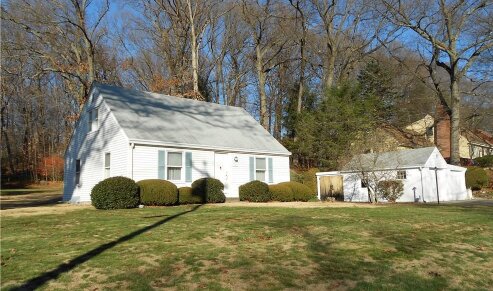
Photo above - my grandfather's house. It cost $5,000 in 1950. Current value? $350,000 - a 7,000% increase. Over the past 20 years, US Treasury Bonds have actually LOST money.
Suppose someone told you that “the safest investment in the world” was actually the riskiest. Regarded as the safest, because it's backed by the full faith and credit of the US government. And that may be why Treasury Bonds are now the worst performing thing you could have bought over the past 5 years. 10-year Treasuries have lost 1/3rd of their value. See link at bottom . . .
This blew my mind, so I checked out alternatives (over 5 years) on Yahoo Finance. Here's what we COULD have been making money in, instead of losing 1/3rd in Treasury Bonds:
- An S&P 500 index fund – up 58% over 5 years.
- Gold up 61% (full disclosure, I'm a gold skeptic, not a believer)
- Crude oil futures, up 28%
- All the “real” foreign stock markets (UK, Japan, etc.) are up about 50%
- US real estate – I defy anyone to produce data which shows housing hasn't nearly doubled over the past 5-10 years. Come on . . . I dare you.
So who buys Treasuries? And are these people brain dead?
Actually, US banks HAVE to buy them. It's required by law. Both those Wall Street too-big-to-fail banks, and small-town local banks. The FDIC has a rule saying banks need to have a certain percentage of Treasuries in their vaults. For “safety and stability”. Which might explain why we've had at least 6 bank failures this year, totaling even more than failures during the housing crisis, in 2008. Treasuries lost 1/3 of their value. A thought experiment - suppose 1/3rd of mortgage borrowers never repaid? Crisis, or not?
Who else buys treasuries? Retirees and IRA holders. They've been told – for decades – that their portfolios should be bulletproof, and the way to get there is by owning 60% stocks, and 40% Treasuries. Because “stocks can go down, but Treasuries offer protection of principal.”
I am SO not making this up. Go to the websites of Merrill Lynch, Charles Schwab Fidelity, Vanguard . . . it's like one of the 10 commandments: the 60% stock 40% Treasuries ratio. Want to bet these firms are eager to sell you some of their OWN treasuries, right now? Brokerages also have mutual funds made up of nothing but Treasuries, in case you heard that “mutual funds are safer”.
The public has been fed this line for decades, and guess what? If you go back two decades – to 2002 – Treasuries STILL have lost out to inflation over that time. There is NO WAY you could ever have come out ahead by owning US government debt, short OR long term.
Do you ever Google places you used to live? Your former homes, growing up? Your parents' homes, grandparents' homes? To see if they're still standing, been remodeled or what? My mom directed me to the Redfin listing for HER father's first house (my grandfather). He bought it right after World War 2. Got a veteran's loan at 2% interest. Stop laughing – it gets better. He only paid $5,000 for that detached 1,300 foot home on nearly an acre of land in New England. 3 bedrooms, 2 bath. Only $5,000. Okay – fast forward to today. Is that home still standing? Yes. Has it been updated? A bit . . . but it's still a 1,300 foot 2 bath home that's 70 years old. What's Redfin's estimate of it's market value today? $350,000. Possibly up to $400,000. It depends how desperate you are to stop renting – or holding Treasuries – and own real estate, I guess. Make an offer?
At this point, I would like to turn this thread over to the politically obsessed readers. Please post your specific reasons WHY either Trump or Biden is the cause of the Treasury Bill disaster (and the national debt, and high interest rates, and homelessness). But remember, Treasuries began their fall from grace 20 years ago, and the National Debt has been snowballing since before Trump and the pandemic.
Go to work, guys. Explain to me why we're NOT on the eve of destruction, financially.
I'm just sayin' . . .
U.S. Treasury bonds are not ’safe’ - MarketWatch



