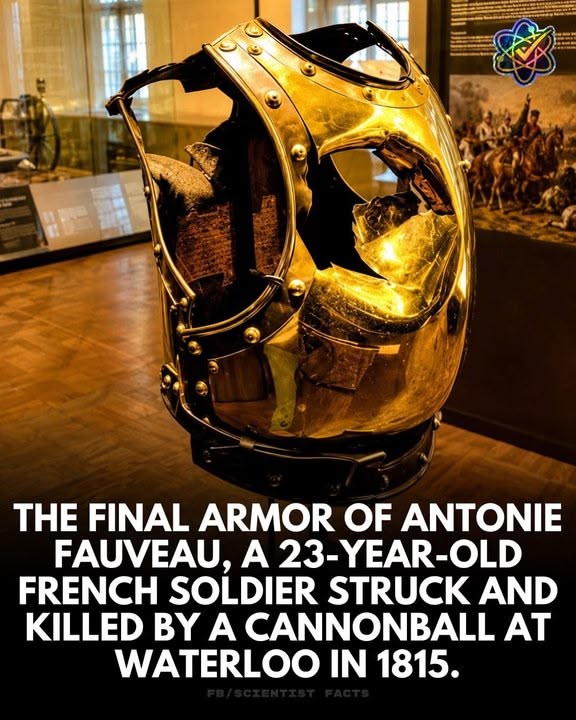
This breastplate stopped a cannonball. The man wearing it did not.
François-Antoine Fauveau was a 23-year-old trooper riding in the ranks of the 2nd Carabiniers, one of Napoleon's elite heavy cavalry regiments, when he was killed at Waterloo on June 18, 1815. His service papers describe a young man with a long freckled face, blue eyes, a hooked nose, and a small mouth. At 1.79 meters tall, he had the exact build the regiment prized: big men on big horses, meant to break enemy lines through sheer weight and momentum. That afternoon, French heavy cavalry charged repeatedly into allied infantry squares, and as they rode, British gunners kept firing until the last possible second before retreating to safety. It was one of those guns that killed Fauveau. The cuirass could deflect a sword strike or a pistol ball. It could not stop a cannonball. But there is a twist: family legend holds that when his call-up papers arrived, Fauveau was about to be married, so his brother enlisted in his place and died instead. The breastplate now sits in the Musée de l'Armée in Paris, the hole still open.