… The Welsh claim to Manhattan; Robert Edwards (1716 - c.1788) was a Welsh buccaneer given 77 acres of largely unsettled Manhattan for his services in disrupting Spanish sea lanes. On June 1st 1778 Edwards leased the land for 99 years to John and George Cruger on the agreement that the land and all improvements thereon were to revert to the descendants of Edwards and his siblings at the expiration of the lease on May 31st 1877. Apparently this never happened, and the land ended up in the hands of Trinity Church, of which the Crugers were wardens. Subsequently, all attempts by Edward's heirs to file a claim to the land have proved fruitless, with the case eventually being defeated by the state's Statute of Limitations. …..
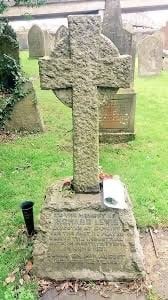
‘The Merthyr Rising’ On 1st June 1831, the symbolic red flag was raised for the first time in the UK at 'The Merthyr Rising'. The Merthyr Rising started as a popular rebellion against unjust working and living conditions, but quickly rose into armed insurrection, which has been described as "the most ferocious and bloody event in the history of industrialised Britain." The Great Depression of 1829 had led to massive unemployment and when Merthyr ironmaster William Crawshay lowered his employee's wages, the panic in the town, led to a series of local demonstrations. One led by Thomas Llewelyn, a Cyfartha miner, resulted in goal prisoners being released and another from Hirwaun marched on Merthyr, raiding property and shops to return previously confiscated goods to their owners. In an attempt to restore order, Scots Highlanders from their Brecon Barracks were sent in and opened fire on a large crowd that had assembled outside the Castle Inn. Over two dozen of the crowd were killed and hundreds wounded. However the Highlanders were forced to retreat and the following day, the Swansea Yeomanry were sent in, but they were ambushed and disarmed. It took a week for order to be restored to the area and the resulting punishment was severe, with Richard Lewis (Dic Penderyn), being hanged at Cardiff Gaol on the charge of wounding a soldier. It is recorded that his last words were "O Arglwydd, dyma gamwedd" (Oh Lord, what an injustice)
….
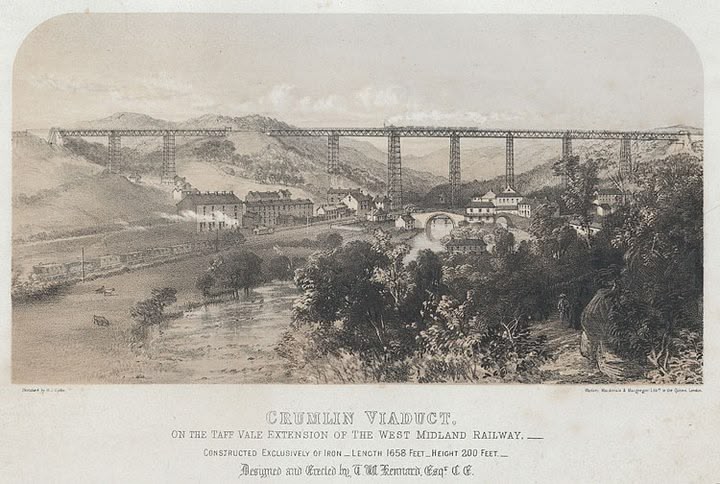
On Monday 1st June 1857, the Crumlin Viaduct was officially opened.
Crumlin viaduct was hailed as 'one of the most significant examples of technological achievement during the Industrial Revolution'. It was the highest railway viaduct in Britain and only the Aqueduct of Spoleto in Italy and the Portage Timber Viaduct in the United States were higher anywhere else in the world.
However, as a result of the report by Dr Reginald Beeching, for British Railways in 1963, over 2,000 stations and a quarter of Britain's railway lines were closed. This included the Crumlin Viaduct, which carried its last passenger train on 13th June 1964. Interestingly, during its demolition, it was used as a location for the film 'Arabesque, starring Gregory Peck and Sophia Loren.. I did see it before it was demolished.
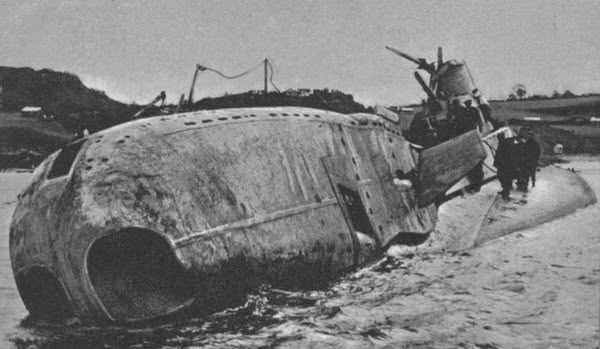
… On 1st June 1939, the submarine HMS Thetis sank during trials in Red Wharf Bay, Anglesey, with the loss of 99 men.
After the tragedy, she was salvaged and recommissioned as HMS Thunderbolt serving in the Atlantic and Mediterranean theatres until she was lost with all hands on 14 March 1943, making her one of the few military vessels that have been lost twice with her crew in their service history.
…. 1946Television licences were issued in Britain for the first time. They cost £2. ….
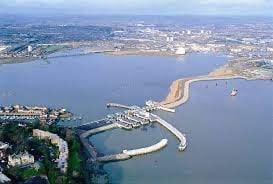
Cardiff Bay Barrage was officially opened on 1st June 2001. it is one of the largest civil engineering projects ever completed in Europe.
….1959: The first edition of Juke Box Jury is aired on BBC TV. Hosted by David Jacobs, the guest panel listen to a portion of a new pop record and forecast if it would be a "hit" or a "miss". The first panels consists of Pete Murray, Alma Cogan, Gary Miller and Susan Stranks.
1967: The Beatles release Sgt. Pepper's Lonely Hearts Club Band, their eighth studio album. Its innovative experimental style is part driven by the their recent retirement from touring, meaning they would not be expected to play the songs live.Radio
1962: The Pilkington Committee on Broadcasting concludes that the British public have no appetite for commercial radio broadcasting.
1970: Radio Hauraki broadcasts its final programme as a 'pirate' from the radio-ship Tiri 2 after the station is awarded a license to broadcast by the New Zealand government.
I'm not old enough to have seen the Crumlin viaduct, but I have cycled across the Cardiff Bay barage a few times. I had a very small part in my school musical about Dic Penderyn, it was very moving, the musical, not my part. Love the daily history lessons, keep them coming.