May 29th in History
May 29th
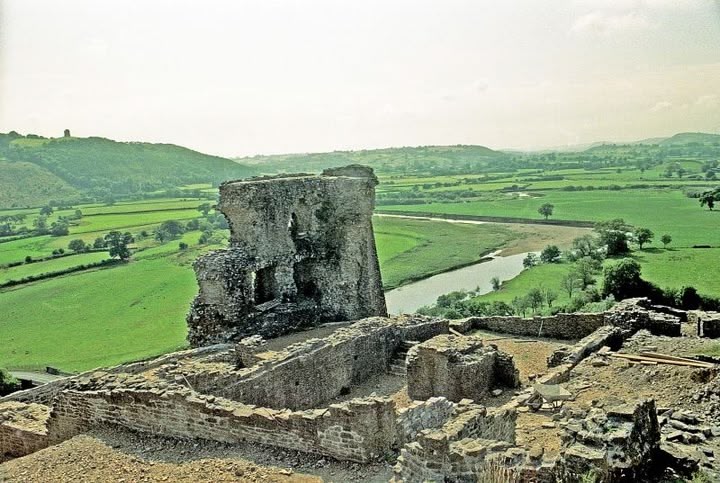
The Battle of Cadfan, at which the forces of Henry III of England were roundly defeated, is widely believed to have taken place in the Tywi Valley, Carmarthenshire on 29th May 1257.
Henry's army arrived near Carmarthen before marching up the Tywi Valley towards Dinefwr Castle near Llandeilo, which they intended to take from Llywelyn ap Gruffydd and restore to their ally Rhys Fychan. However, unbeknown to the English, Rhys had come to an agreement with Llywelyn, which left them without a guide in hostile and unfamiliar territory.
On the first engagement, the English army drove the Welsh westwards towards the heavily wooded area known as Broad Oak, where many more Welsh were positioned to ambush the unsuspecting English. The fighting continued all day with the Welsh employing continual hit and run tactics, using their knowledge of the area to their advantage, before striking a final blow to the tired and confused English. It is reported that 2000 of Henry's army were killed and many nobles taken hostage.
Many local place names recall the battle, with Cadfan deriving from the Welsh cad meaning battle and ban meaning peak. A local bridge, Pont Steffan, is named after the English army's leader Stephen Bacon who was killed in the battle, and nearby fields carry the names Cae Ochain - field of groans, Cae Tranc - field of death and Cae Ffrainc - field of Normans.
....
1648 King Chsrles I of England attempts to escape captivity at Carisbrooke Castle on the Isle of Wight for the second time by hacksawing through a barred window, but he gets stuck and is caught in the act
....
1798The United Irishmen Rebellion against British Rule took place. Between 300 and 500 United Irishmen were massacred by the British Army in County Kildare, Ireland.
....
1854 Paddington Station, London's terminus for the Great Western Railway opens, with a design by Isambard Kingdom Brunel
....
On 29th May 2006 a concert was held in Pontypridd to celebrate the 150th anniversary of Hen Wlad Fy Nhadau, the Welsh national anthem.
Hen Wlad Fy Nhadau was originally known as Glan Rhondda (Banks of the Rhondda) and was written in January 1856 by Evan James from Pontypridd, with the music composed by his son, James. It was first performed later in the year at Capel Tabor, Maesteg by Elizabeth John, also from Pontypridd.
The song became well known nationally after Thomas Llewelyn of Aberdare included it in his competition winning collection of unpublished Welsh airs at the 1858 Llangollen festival and then allowed the adjudicator John Owen to include it in his publication Gems of Welsh Melody under its now famous title, Hen Wlad Fy Nhadau.
In 1905, the touring New Zealand rugby team started to perform the Haka before every match, and as a response, the Welsh Rugby Union administrator Tom Williams suggested that the Welsh player Teddy Morgan sing Hen Wlad Fy Nhadau. When Morgan began to sing, the crowd joined in and this is credited as being the first time a national anthem was sung at the start of a sporting event.
At the time, the official national anthem was 'God Save the Prince of Wales', but from then on, 'Hen Wlad Fy Nhadau' was also sung, until 1975, when it was decided that only 'Hen Wlad Fy Nhadau' would be sung.
[media=https://youtu.be/8TMS-AbQ308]
Versions of Hen Wlad fy Nhadau are also used as anthems in Cornwall, Brittany and Patagonia
https://similarworlds.com/countries/wales/culture-history-sport-people/4780874-A-tale-of-three-anthems-Brittany-Cornwall-CYMRU
....
1912 Fifteen young women are fired by Curtis Publishing in Philadelphia for dancing the "Turkey Trot" during their lunch break
....
1969 Atlantic Records releases the eponymous debut album of "Crosby, Stills & Nash"; it contains hits 'Marrakesh Express' and 'Suite: Judy Blue Eyes'
1969: British supergroup Blind Faith, featuring Eric Clapton, Ginger Baker, Rick Grech and Steve Winwood make their live debut at the free concert in London's Hyde Park.
1987: At the three day Concert for Berlin David Bowie plays in front of the Reichstag with the speakers pointing towards the nearby Berlin Wall where thousands of young East Berliners stand and listen.
The Battle of Cadfan, at which the forces of Henry III of England were roundly defeated, is widely believed to have taken place in the Tywi Valley, Carmarthenshire on 29th May 1257.
Henry's army arrived near Carmarthen before marching up the Tywi Valley towards Dinefwr Castle near Llandeilo, which they intended to take from Llywelyn ap Gruffydd and restore to their ally Rhys Fychan. However, unbeknown to the English, Rhys had come to an agreement with Llywelyn, which left them without a guide in hostile and unfamiliar territory.
On the first engagement, the English army drove the Welsh westwards towards the heavily wooded area known as Broad Oak, where many more Welsh were positioned to ambush the unsuspecting English. The fighting continued all day with the Welsh employing continual hit and run tactics, using their knowledge of the area to their advantage, before striking a final blow to the tired and confused English. It is reported that 2000 of Henry's army were killed and many nobles taken hostage.
Many local place names recall the battle, with Cadfan deriving from the Welsh cad meaning battle and ban meaning peak. A local bridge, Pont Steffan, is named after the English army's leader Stephen Bacon who was killed in the battle, and nearby fields carry the names Cae Ochain - field of groans, Cae Tranc - field of death and Cae Ffrainc - field of Normans.
....
1648 King Chsrles I of England attempts to escape captivity at Carisbrooke Castle on the Isle of Wight for the second time by hacksawing through a barred window, but he gets stuck and is caught in the act
....
1798The United Irishmen Rebellion against British Rule took place. Between 300 and 500 United Irishmen were massacred by the British Army in County Kildare, Ireland.
....
1854 Paddington Station, London's terminus for the Great Western Railway opens, with a design by Isambard Kingdom Brunel
....
On 29th May 2006 a concert was held in Pontypridd to celebrate the 150th anniversary of Hen Wlad Fy Nhadau, the Welsh national anthem.
Hen Wlad Fy Nhadau was originally known as Glan Rhondda (Banks of the Rhondda) and was written in January 1856 by Evan James from Pontypridd, with the music composed by his son, James. It was first performed later in the year at Capel Tabor, Maesteg by Elizabeth John, also from Pontypridd.
The song became well known nationally after Thomas Llewelyn of Aberdare included it in his competition winning collection of unpublished Welsh airs at the 1858 Llangollen festival and then allowed the adjudicator John Owen to include it in his publication Gems of Welsh Melody under its now famous title, Hen Wlad Fy Nhadau.
In 1905, the touring New Zealand rugby team started to perform the Haka before every match, and as a response, the Welsh Rugby Union administrator Tom Williams suggested that the Welsh player Teddy Morgan sing Hen Wlad Fy Nhadau. When Morgan began to sing, the crowd joined in and this is credited as being the first time a national anthem was sung at the start of a sporting event.
At the time, the official national anthem was 'God Save the Prince of Wales', but from then on, 'Hen Wlad Fy Nhadau' was also sung, until 1975, when it was decided that only 'Hen Wlad Fy Nhadau' would be sung.
[media=https://youtu.be/8TMS-AbQ308]
Versions of Hen Wlad fy Nhadau are also used as anthems in Cornwall, Brittany and Patagonia
https://similarworlds.com/countries/wales/culture-history-sport-people/4780874-A-tale-of-three-anthems-Brittany-Cornwall-CYMRU
....
1912 Fifteen young women are fired by Curtis Publishing in Philadelphia for dancing the "Turkey Trot" during their lunch break
....
1969 Atlantic Records releases the eponymous debut album of "Crosby, Stills & Nash"; it contains hits 'Marrakesh Express' and 'Suite: Judy Blue Eyes'
1969: British supergroup Blind Faith, featuring Eric Clapton, Ginger Baker, Rick Grech and Steve Winwood make their live debut at the free concert in London's Hyde Park.
1987: At the three day Concert for Berlin David Bowie plays in front of the Reichstag with the speakers pointing towards the nearby Berlin Wall where thousands of young East Berliners stand and listen.
61-69, M


