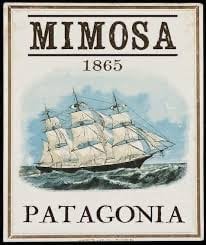
25th May is one of the most important holidays in Argentina. It is the day in 1810 that the Spanish viceroy was removed and replaced by the Primera Junta (First Patriotic Government) during the May Revolution and ultimately led to the birth of modern Argentina. .. .. On 25th May 1865 the clipper ship 'Mimosa' set sail from Liverpool carrying 153 Welsh emigrants bound for Patagonia. A bad storm brewed up and they stayed in the Mersey estuary for 3 days before being able to continue their journey.
The passengers paid £12 per adult and £6 per child for the journey. Their aim was to establish a Welsh colony in the Chubut River valley in a bid to preserve the Welsh language and culture. They landed on July 28 and were met by Edwyn Cynrig Roberts and Lewis Jones who had arrived in Patagonia in June to prepare for the main cohort of settlers. They named their landing site Porth Madryn and on September 15th 1865 the first town in the colony was named Rawson, which was followed by settlements at Gaiman and Trelew.
In 1875 the Argentine government granted the Welsh settlers ownership of the land, encouraging hundreds of others from Wales to join the colony. Today, more than 50,000 Patagonians are of Welsh descent with almost 5,000 being Welsh speakers. The Welsh-Argentine colony, which became known as Y Wladfa, remains centered around Gaiman, Trelew and Trevelin.
…. 1871The House of Commons passed the Bank Holiday Act, creating public holidays on Easter Monday, Whit Monday and Christmas Day. ….
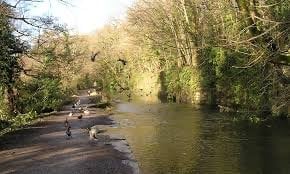
…. The Glamorganshire Canal, stretching between Merthyr and Cardiff, was closed on 25th May 1942( thinking this should be 1842) Construction of the 25-mile canal started in 1790 and was completed by 1794. Its purpose was to transport iron from Merthyr, and it later served the coal industry. It closed as a result of subsidence and competition from the railways; much of its course was later buried beneath the A470 Cardiff to Merthyr Tydfil dual carriageway.
….
The National Slate Museum located between the villages of Llanberis and Dinorwig first opened on 25th May 1972. It is housed in the former workshops of the Dinorwic quarry (1870 - 1969) and connected to Llanberis by the Llanberis Lake Railway. The museum is part of Amgueddfa Cymru – National Museum Wales and the European Route of Industrial Heritage (ERIH). ….
1994The Camelot consortium won the contract to run Britain's first national lottery, starting in November.
…. Music 1967 John Lennon takes delivery of his psychedelically painted Rolls Royce
2002 47th Eurovision Song Contest: Marie N for Latvia wins singing "I Wanna" in Tallinn [media=https://youtu.be/_M-w89U8TEU]
…
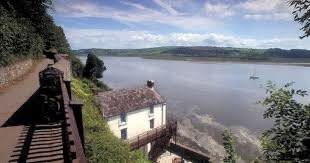
And finally.. The Laugharne Common Walk is held every three years on Whit Monday, when the people of the town, led by the Portreeve and the officials of the Court, retrace the town’s ancient boundaries. The walk, which is between 22 and 24 miles takes in fields, hedges, streams, ditches and a bog, takes eight to nine hours.
No-one knows when the Laugharne Common Walk began, but the principle of walking around a town's boundaries goes back to Pagan times when there were no maps or legal documents to define ownership of land. Later the Romans, who we know were in the Laugharne area due to the discovery of coin hoards, assimilated local customs while also worshipping their own Gods and holding festivals to honour Robigala, their god of boundaries.
Also, many of the names of places along the walk, such as Spring Mead, Merry Moor, Beggars Bush, Cuckoo, Kite Rock, Knaves Lane, Mackerel Lake, Moilding Bit and Oaten Cake & Cheese are of Anglo-Saxon origin and the charter of the town dates from 1290, when it received its charter from Sir Guido de Brione. However, the first written evidence of the walk comes from the Minutes of the Corporation, which date continuously from 1711, and it is known for certain that the walk has been held every three years since then.