
On this day May 5th
TheSirfurryanimalWales · 61-69, M
On This Day - 5th May
1215 Rebel barons renounced their allegiance to King John; part of a chain of events that led to the signing of the Magna Carta.
1260 Kublai Khan, the grandson of Genghis Khan, became the ruler of the Mongol Empire.
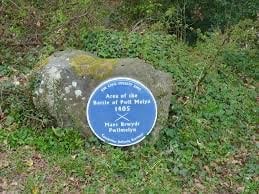
On 5th May 1405 Owain Glyndŵr suffered his first major defeat at the Battle of Pwll Melyn on land immediately to the north of Usk Castle. This was a serious setback was to his uprising in South East Wales.
The battle had begun with an attack on Usk Castle led by Glyndwr's son, Gruffydd. The castle repelled the assault and counter-attacked, driving the Welsh across the Usk and into the forest of Monkswood towards Mynydd Pwll Melyn - the 'Hill of the Yellow Pool'.
According to the report from Adam of Usk the Welsh lost 1,500 men, with three hundred beheaded in front of Usk Castle. Among those killed were Glyndwr's brother Tudor and John ap Hywel, Abbot of the Llantarnam Cistercian monastery. Gruffydd was captured as he was ministering to the dying and wounded; he was imprisoned in the Tower of London.
On May 5, 1552, in the midst of the reign of Edward VI, the Duke of Somerset, Edward Seymour, was executed. Seymour, who had previously served as the Lord Protector during Edward VI’s minority, had fallen from power after political rivalries came to a head. He was arrested, tried, and ultimately executed for treason
1760 The first public hanging took place at Tyburn in London. Earl Ferrers was executed after being convicted of murdering his valet. He was the first to be hanged by the new 'drop' which had just been introduced in the place of the barbarous cart, ladder and medieval three-cornered gibbet.
1762
Prussia and Russia signed the Treaty of Saint Petersburg, which ended seven years of war between the two.
In 1880, British Standard Time (BST) was officially adopted. This was a significant development in the realm of timekeeping and would go on to shape daily life in Britain for decades. Before the implementation of BST, each region of Britain kept its own local time based on the position of the sun. However, the rapid expansion of railways and telecommunication systems in the 19th century led to confusion and inefficiency.
The decision to introduce a standardized time for all of Britain aimed to streamline operations, particularly for the railway system, and it had far-reaching effects on trade, communication, and social life in the country. The adoption of BST was a key moment in the industrialization of Britain and its integration into a more globally connected world.
On May 5, 1918, the British government passed the Representation of the People Act, which represented a significant milestone in the history of British democracy. The Act granted the vote to all men over the age of 21 and women over the age of 30 who met certain property qualifications.
1921: Perfume Chanel No.5 was released.
Gabrielle "Coco" Chanel released her first fragrance ever, which ended up also being the first modern perfume. Coco was also the first face of the advertisement for the perfume.
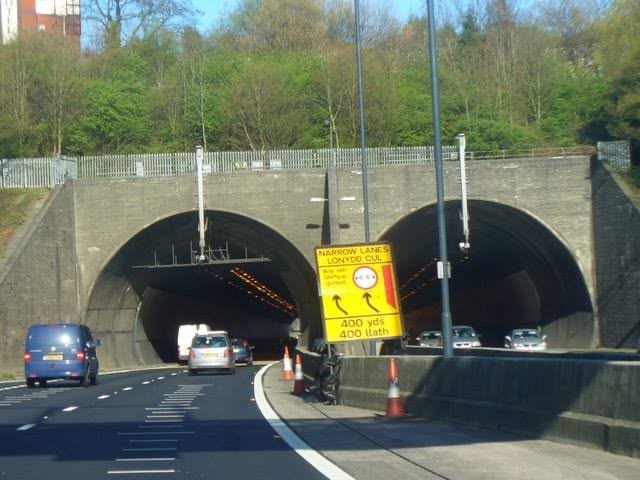
On 5th May 1967 the Brynglas Tunnels bypassing Newport on the M4 motorway were opened.
The Brynglas Tunnels carry the M4 motorway under Brynglas Hill in Newport. The 1,200-foot-long twin-bored tunnels were the first tunnels in the British motorway network and are still the only bored tunnels.
5 May 1969
The Beatles single 'Get Back' was released in the US. John Lennon claimed in 1980 that "there's some underlying thing about Yoko in there", claiming that Paul McCartney looked at Yoko Ono in the studio every time he sang "Get back to where you once belonged."
The single reached No.1 in the United Kingdom, the United States, Ireland, Canada, New Zealand, the Netherlands, Australia, France, West Germany, Mexico, Norway, Switzerland, Austria, and Belgium.

