January 31st in History
January 31st
1747 - The first clinic specializing in venereal diseases was opened in London.
1849 The abolition of the Corn Laws. These trade barriers had been designed to protect cereal producers in the United Kingdom against competition from less expensive foreign imports and their abolition marked a significant step towards free trade.
1858The Great Eastern, the five-funnelled steamship designed by Isambard Kingdom Brunel and John Scott Russell, was launched at Millwall. At the time, it was the world's largest ship.
1867The four bronze lions at the base of Nelson's Column were completed.
Cremated on this day 1893,
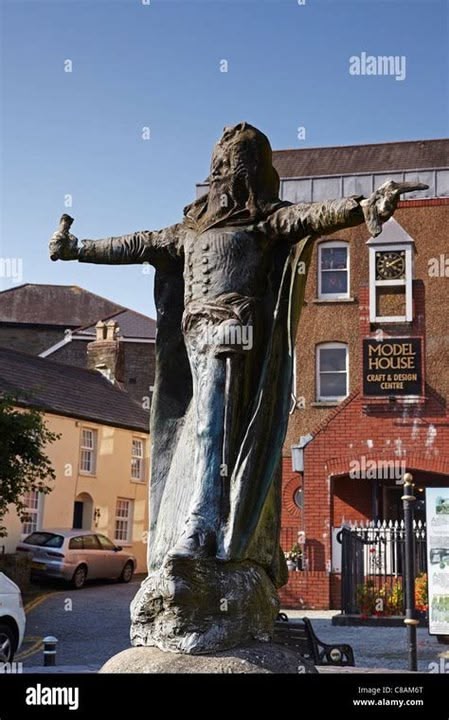
William Price ( He’s featured before- Physician and eccentric) was cremated on a pyre of two tons of coal on a hillside overlooking Llantrisant. It was watched by 20,000 people and overseen by his family, who were dressed in a mix of traditional Welsh and Druidic clothing.
More about Price in the reply box below.
1893 - The trademark "Coca-Cola" was registered in the US Patent Office.
1967: John Lennon buys an old poster, printed in 1843, publicising Pablo Fanque's Circus Royal. It inspires him to write the song "Being for the Benefit of Mr. Kite!", with much of the lyric being taken from the list of performers on the poster.
Mr Kite himself being William Kite, a circus performer who worked for Pablo Fanque's circus in Rochdale from 1843 to 1845. The horse mentioned in the song as "Henry" was changed from the actual name on the poster – "Zanthus".
Happy Independence Day to Nauru, the smallest independent republic in the world! 🇳🇷 On January 31, 1968, this unique Pacific island gained its sovereignty. From its rich history to its stunning coral reefs, there is so much to love about this tiny nation.
2007: An unpublished Jim Morrison poem "Woman in the Window" is set to music to help publicise the Global Cool campaign to fight global warming. The poem was written in Paris shortly before the Doors frontman's death in 1971.
[media=https://youtu.be/6Kb1zZ8KsNU]
And today is
Today is the feast day of Saint Aidan (Madog in Welsh)
According to Welsh sources, Aidan was born c.558, into the royal family of Strathclyde and raised at the court his grandfather, King Muiredach of Ulster. Aidan became a Christian at an early age and when old enough, he travelled to Wales to study under Saint David at Glyn Rhosyn (later Saint David’s Cathedral) and St. Cennydd at Llangennith.
Aidan was renowned for his consideration to the poor, often giving them his own food and clothing. He founded a church Llanmadoc on Gower and became the Abbot at Glyn Rhosyn, following David’s death. He later returned to Ireland and settled in Wexford where he established monasteries at Ferns and Enniscorthy.
History of Wales.
1747 - The first clinic specializing in venereal diseases was opened in London.
1849 The abolition of the Corn Laws. These trade barriers had been designed to protect cereal producers in the United Kingdom against competition from less expensive foreign imports and their abolition marked a significant step towards free trade.
1858The Great Eastern, the five-funnelled steamship designed by Isambard Kingdom Brunel and John Scott Russell, was launched at Millwall. At the time, it was the world's largest ship.
1867The four bronze lions at the base of Nelson's Column were completed.
Cremated on this day 1893,
William Price ( He’s featured before- Physician and eccentric) was cremated on a pyre of two tons of coal on a hillside overlooking Llantrisant. It was watched by 20,000 people and overseen by his family, who were dressed in a mix of traditional Welsh and Druidic clothing.
More about Price in the reply box below.
1893 - The trademark "Coca-Cola" was registered in the US Patent Office.
1967: John Lennon buys an old poster, printed in 1843, publicising Pablo Fanque's Circus Royal. It inspires him to write the song "Being for the Benefit of Mr. Kite!", with much of the lyric being taken from the list of performers on the poster.
Mr Kite himself being William Kite, a circus performer who worked for Pablo Fanque's circus in Rochdale from 1843 to 1845. The horse mentioned in the song as "Henry" was changed from the actual name on the poster – "Zanthus".
Happy Independence Day to Nauru, the smallest independent republic in the world! 🇳🇷 On January 31, 1968, this unique Pacific island gained its sovereignty. From its rich history to its stunning coral reefs, there is so much to love about this tiny nation.
2007: An unpublished Jim Morrison poem "Woman in the Window" is set to music to help publicise the Global Cool campaign to fight global warming. The poem was written in Paris shortly before the Doors frontman's death in 1971.
[media=https://youtu.be/6Kb1zZ8KsNU]
And today is
Today is the feast day of Saint Aidan (Madog in Welsh)
According to Welsh sources, Aidan was born c.558, into the royal family of Strathclyde and raised at the court his grandfather, King Muiredach of Ulster. Aidan became a Christian at an early age and when old enough, he travelled to Wales to study under Saint David at Glyn Rhosyn (later Saint David’s Cathedral) and St. Cennydd at Llangennith.
Aidan was renowned for his consideration to the poor, often giving them his own food and clothing. He founded a church Llanmadoc on Gower and became the Abbot at Glyn Rhosyn, following David’s death. He later returned to Ireland and settled in Wexford where he established monasteries at Ferns and Enniscorthy.
History of Wales.

61-69, M