There are additional features to our mother daughter relationship that I continue to give her guidance concerning, including her genitalia.
Identifying with your vulva involves understanding, appreciating, and monitoring the health of your external genitalia—the parts you can see and touch between your legs.
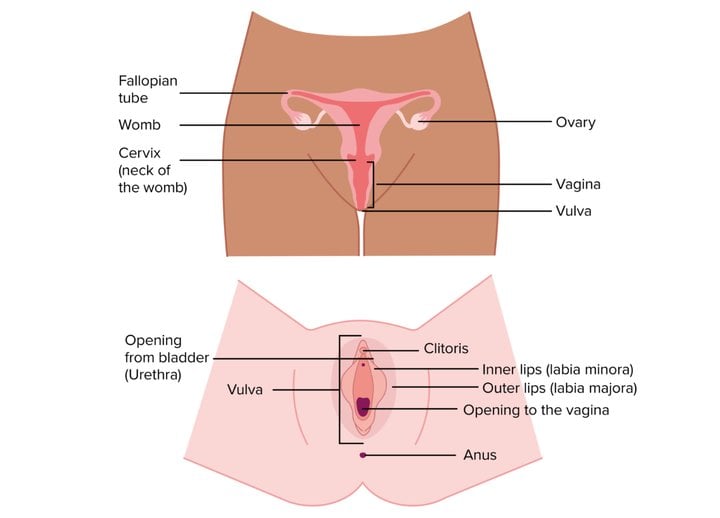
It is a process of becoming comfortable with your own unique anatomy, which includes the mons pubis, labia majora (outer lips), labia minora (inner lips), clitoris, and the vaginal opening.
Key Aspects of Identifying with Your Vulva Understanding "Normal": Vulvas vary greatly in size, shape, color (from pink to brown or purple), and symmetry. Labia minora can be, for example, long, tucked, or asymmetrical. There is no single "correct" appearance, and most variations are healthy.
Self-Examination: Regularly looking at and touching your vulva helps you establish a baseline for your own "normal".
How to: Use a handheld mirror and a good light source to examine the area for any changes.
What to check: Look for new moles, changes in skin color (whitening or darkening), sores, lumps, warts, or persistent itching/soreness.
Anatomical Knowledge: Understanding the distinct parts helps with identification: Vulva vs. Vagina: The vulva is the external area, while the vagina is the internal, muscular canal.
Labia Majora: The outer, hair-bearing "lips" that protect the inner parts.
Labia Minora: The inner,, hairless "lips" surrounding the vaginal and urethral openings.
Clitoris: A small, highly sensitive organ for pleasure located at the top of the labia.
Hygiene and Care: Regular care involves gentle cleansing with water or mild soap, as the area is sensitive and prone to irritation from harsh products.
Health Awareness: Knowing your vulva allows for early detection of issues like infections (e.g., thrush, STIs) or, in rare cases, vulvar cancer.
Overcoming Stigma and Building Confidence Many people grow up with little education about their own bodies, leading to shame or embarrassment. Identifying with your vulva means "getting to know" your body, which can improve self-esteem and sexual function.
Mindful Observation: Using a mirror to look at your vulva with curiosity rather than judgment.
Vulva Art/Mapping: Creating art to reflect on your feelings toward your body.
If you notice any persistent changes, such as new bumps, sores, or unusual discharge, it is recommended to see a doctor or gynecologist.
Here are our top tips for self-checking: Wash your hands Sit comfortably, with a mirror, in a well-lit room or use a torch Place the mirror between your legs Start on the outside and look and feel for any pain, soreness, lumps, rashes or changes to your skin. Open the labia, look and feel for any pain, soreness, lumps, rashes or changes to your skin. Check around the opening to your vagina and your perineum