Delovoye village of Rakhiv district is well known to any Ukrainian schoolboy. After all, in all textbooks for the 8th grade it is called «the geographical center of Europe». The text of the textbook is accompanied by a photo of a modest two-meter column with a long Latin text. It was established by Austro-Hungarian surveyors in 1887.
Until 1947, this central settlement of all Europe was called Tribuszany. At that time it was inhabited by the most amazing international: Ukrainians and Italians, Jews and Czechs, Hungarians, Greeks and Poles. The most numerous ethnos — Ukrainians, left the most significant sacral-architectural heritage to their descendants: the churches of Nativity and Assumption of the Blessed Virgin Mary.
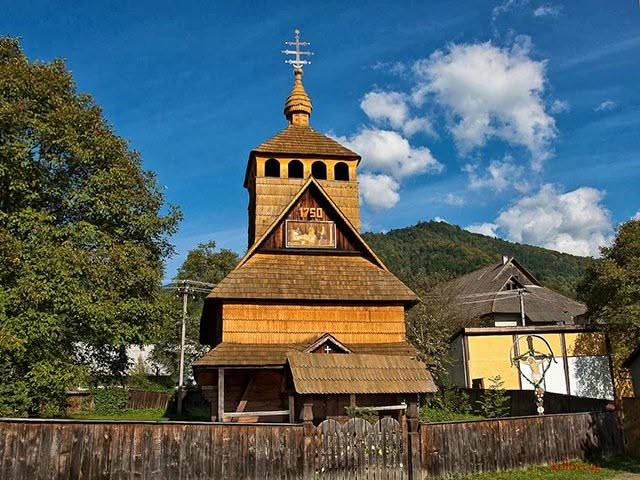
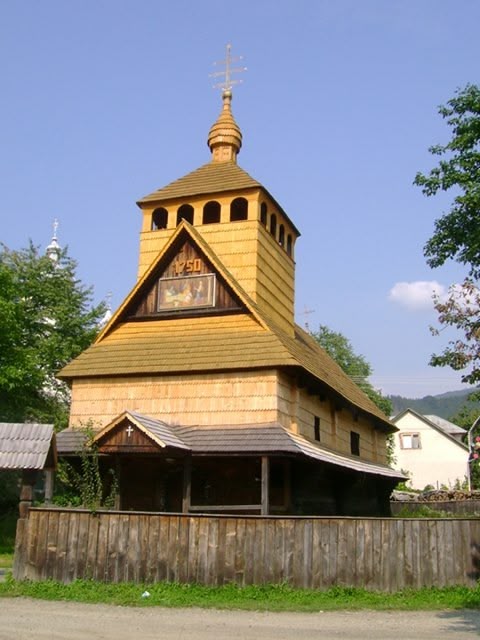
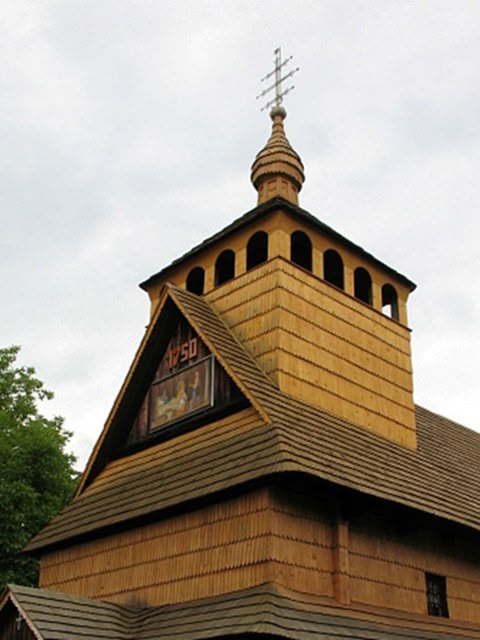
The oldest church of the former Tribushan and the present village of Delovoye is considered to be the last, wooden one, which is dedicated to the Assumption of the Virgin Mary. It was built in 1750 with money raised by the Ukrainian community, but this did not prevent this construction from incorporating the strongest features inherent in the architecture of its Ukrainian neighbors in Tribushany.
To Italians who have taken root in this section of the Ukrainian Carpathians, the church resembles a typical Alpine chalet. It clearly shows the division into the first and second floor, which is characteristic of the chalets of the Alpine Italy. This effect was achieved through the use of different materials. The main first floor of the temple was made of massive oak stakes. The second floor was built up from light and flavorful spruce boards, the cheapest and most popular material in these parts.
The Czechs, who by fate found themselves on the right bank of the Tisza, compare the power and monumentality of the Assumption Church’s construction to the pressure exerted on the souls of neophytes by their famous St. Vitus Cathedral, built in Prague Castle and one of the best examples of Western European Gothic architecture.
Hungarians attribute their influence on the builders to the appearance of a four-sided frame tower under a hipped roof adorned with an octagonal pinnacle on the oldest Tributary church. After all, it is so similar to the architecture of Budapest, synthesized by the Ottoman invaders and the Habsburg emperors.
But the locals know for sure that this Church of the Assumption is flesh and flesh of the Carpathians and is built in accordance with the best local traditions of house-building. It is built of the most common tree species in this part of the mountains — spruce and oak. It is made in two logs, as a typical Hutsul house. The building is surrounded by a protective rain shelter and covered with a steep hipped roof, matching the proud profiles of the surrounding mountains.
This wooden church of the Carpathians has one of the highest levels of preservation in the entire Transcarpathian region. The temple was lucky — during the Soviet regime it was recognized as an architectural monument and restored. Therefore, staying at in Rakhiv, you will be able to see one of the most interesting Transcarpathian temples. And the most courageous and active tourists can take advantage of the opportunity and climb the marked trail from Delovoye to the mountain Pop Ivan, one of the six Ukrainian two-thousanders. Visit the center of Europe, climb one of the country’s highest mountains, see an amazing wooden temple — and the quality of your vacation in the Carpathians will be the envy of any seasoned traveler.