Analysis of Projectile Deflection in Composite‑Concrete Protective Systems
An open‑access study, “Analysis on Deflection of Projectile Penetrating into Composite Concrete Targets” (PMC9695738), was recently shared by Prof. Ted Postol (MIT). Written by a consortium of Chinese defense engineers, the paper examines whether modern penetrators can defeat deeply buried infrastructure, an issue central to any attempt at neutralizing Iran’s hardened uranium‑enrichment sites.
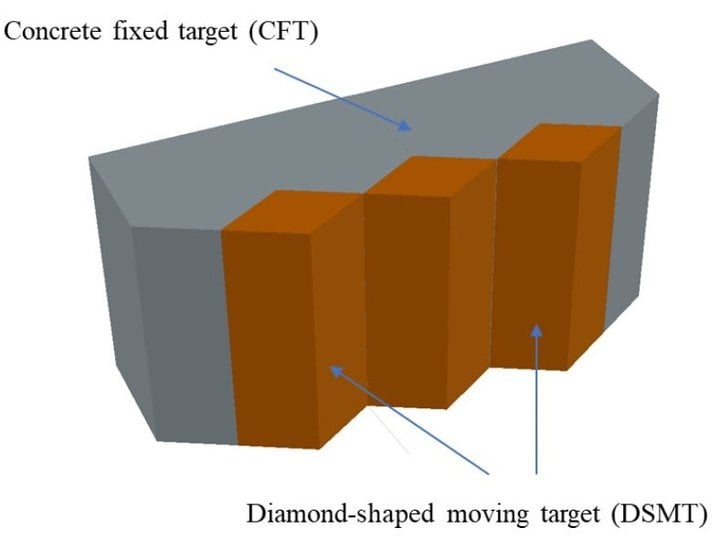
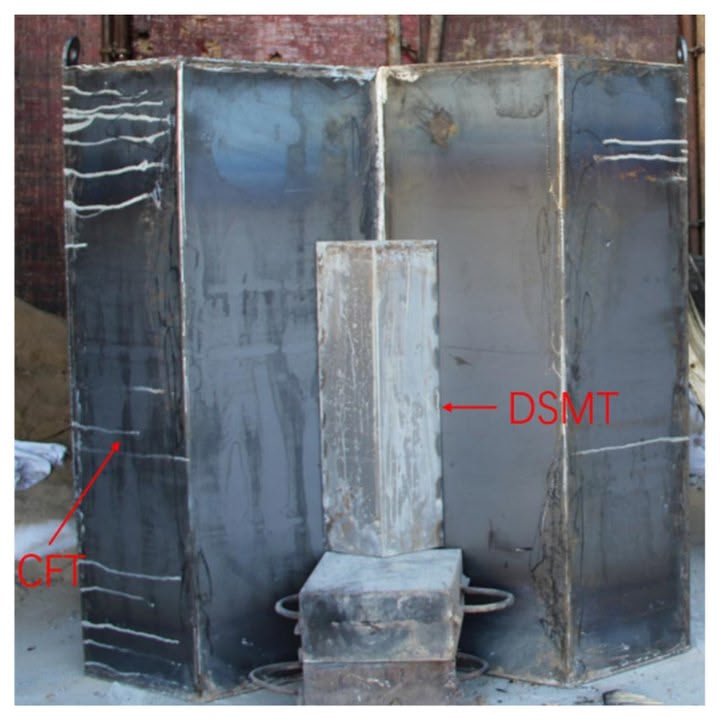
Iran’s underground nuclear sites are protected by a composite concrete structure consisting of a fixed concrete slab combined with a diamond-shaped movable concrete block underneath. When a projectile strikes this diamond-shaped block off-center, the block can rotate and absorb momentum, causing the projectile to deflect. This deflection results in a longer penetration path and significantly reduces the projectile’s energy transfer efficiency.
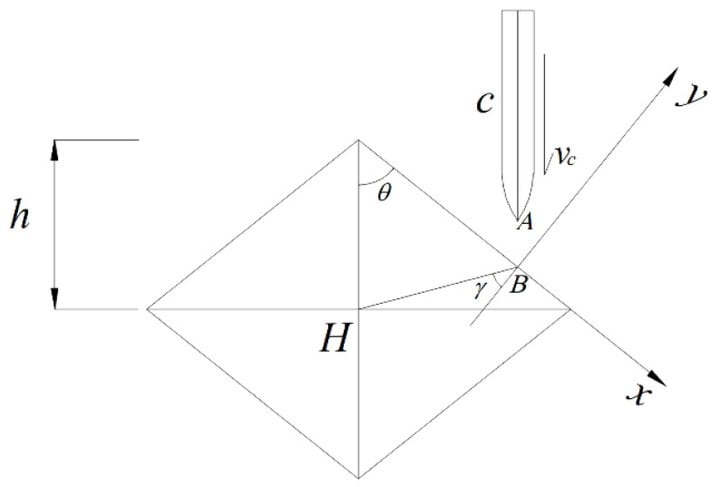
The authors analyzed a 76 mm diameter, 14.1 kg ultra-high-strength alloy steel projectile (yield strength approximately 1766 MPa) impacting a diamond-shaped target at an initial velocity of around 400 m/s. The model incorporates an internal geometric parameter θ = 60° to characterize the projectile-target interaction. They solved the coupled rigid body dynamic equations for both projectile and moving target, accounting for momentum and angular momentum exchange:
The projectile’s post-impact linear momentum is equal to its initial momentum plus the impulse.
The projectile’s angular momentum after impact equals the torque from the impulse times its moment of inertia.
Similarly, the diamond-shaped block’s post-impact momentum and angular velocity are computed with equal and opposite impulses.
A restitution coefficient of approximately -0.5 models the collision’s elasticity.
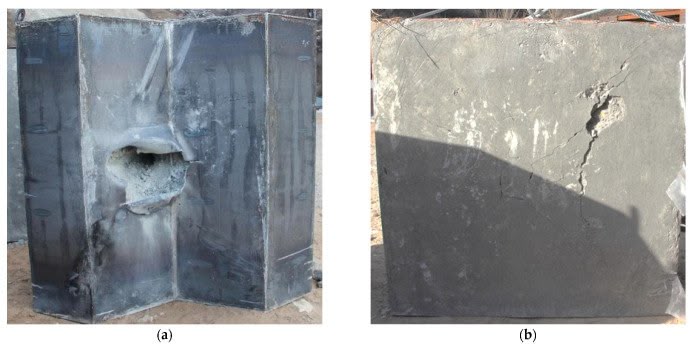
Theoretical calculations and experimental results consistently show that the projectile’s deflection angle increases with impact velocity, enhancing the protective effect of the diamond-shaped moving target. Tests at velocities of 300 m/s and 500 m/s demonstrated that higher impact speeds significantly increase the deflection angle, which in turn reduces the penetration depth into the concrete target. High-speed camera footage validated these findings by capturing the projectile’s flight attitude and deflection behavior during impact.
From a military analysis perspective, this study highlights significant limitations of United States bunker-busting munitions. The Massive Ordnance Penetrator (MOP), a 30,000-pound precision-guided bomb engineered for deep penetration, achieves effective penetration depths of approximately 60 meters under ideal conditions. However, multiple intelligence assessments indicate that Iran’s nuclear facilities are reportedly buried at depths exceeding 80 meters and are protected by diamond-shaped concrete structures designed to deflect projectiles, further complicating penetration efforts.
Moreover, the typical impact angle of penetrating projectiles, often around 30 degrees relative to the target normal, can exacerbate ricochet risks. When striking the elevated portions of the diamond-shaped overlays, projectiles may experience significant deflection or even rebound, reducing the likelihood of reaching critical internal components.