
What part does mythology take in our lives?
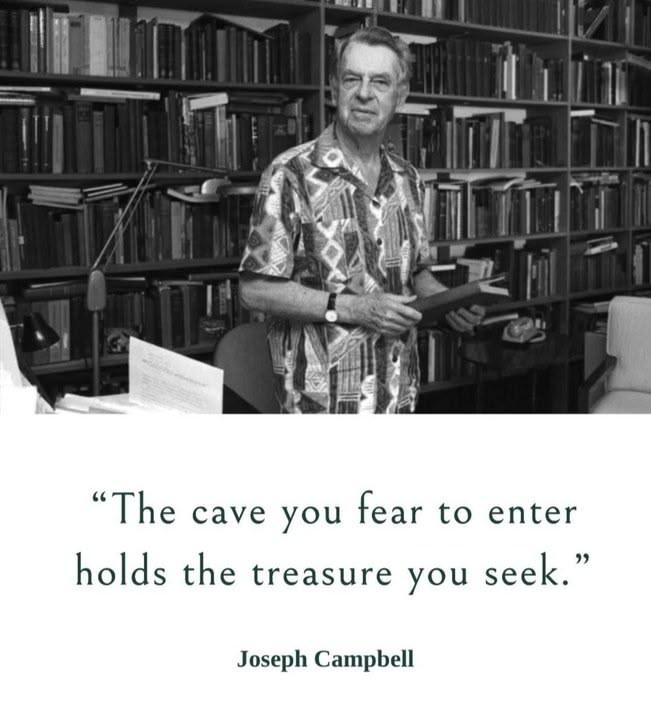
Joseph Campbell studied religion by analyzing myths, viewing most religious doctrines as symbolic, metaphorical narratives rather than literal truths. He believed in the "psychic unity of mankind," suggesting all humans share underlying mythic patterns, and sought to extract lessons for human flourishing from these myths. He was not an adherent of any specific religion, but rather a comparative mythologist who saw religious traditions as expressions of universal human experiences and aspirations.
He is thus known for his work as a mythologist, not a scientist in the conventional sense, and his ideas connect mythology to psychology and human experience, not to empirical scientific discovery. His work includes comparative studies of myths, revealing common patterns like the monomyth or "Hero's Journey", which have been found consistent with modern psychological concepts but are not scientific theories in themselves. While some suggest his work could inform scientific research, it was primarily a scholar of comparative mythology and religion, inspired by Jungian psychology
[media=https://youtu.be/aL0V1MsOeFM]


