Do I have an hourglass figure?
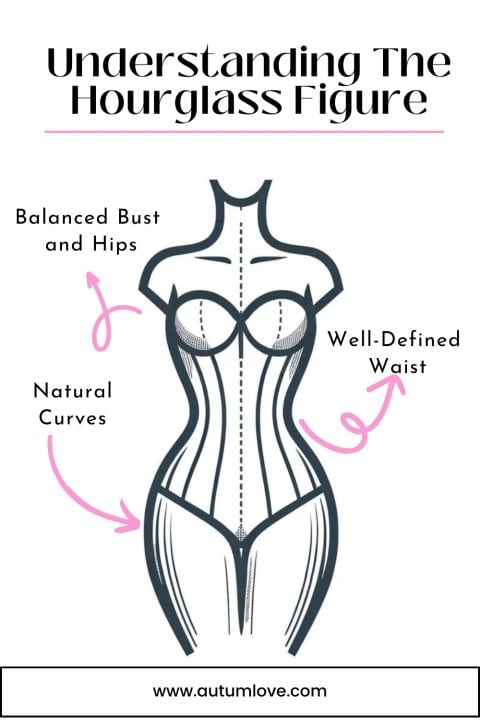
An hourglass figure is a balanced body shape with roughly equal bust and hip measurements and a significantly narrower, well-defined waist, resembling an hourglass.
This curvy silhouette is characterized by a symmetrical, rounded look, with shoulders and hips aligned, and is often considered a classic ideal in fashion, though it's determined by natural bone structure and fat distribution, not just weight.
Key Characteristics
Balanced Proportions: Shoulders and hips are similar in width.
Defined Waist: The waist is distinctly smaller than the bust and hips, creating curves.
Symmetrical Silhouette: The overall shape is balanced and rounded.
Defining Measurements
While subjective, a common guideline is that your waist measurement is at least 25% smaller than your bust and hip measurements, with bust and hips being within about half an inch of each other.
Factors Influencing the Shape
Genetics: Bone structure and natural fat storage patterns play a big role.
Weight Distribution: Fat tends to distribute evenly, but genetics dictate where it settles.
Styling to Enhance the Figure
Define the Waist: Use belts, fitted dresses, or high-waisted bottoms.
Accentuating Curves: Choose clothes that highlight your natural silhouette rather than hiding it.
Balanced Accessories: Opt for medium-sized handbags and proportionate shoes.
Achieving the Look (or Enhancing It)
Strength Training: Focus on building shoulders, glutes, and core.
Balanced Diet: Emphasize whole foods, lean protein, healthy fats, and portion control, avoiding processed items.
Core Work: Strengthen your core to further define the waist.
Remember, these are guidelines, not strict rules, and many variations exist within the hourglass shape.
This curvy silhouette is characterized by a symmetrical, rounded look, with shoulders and hips aligned, and is often considered a classic ideal in fashion, though it's determined by natural bone structure and fat distribution, not just weight.
Key Characteristics
Balanced Proportions: Shoulders and hips are similar in width.
Defined Waist: The waist is distinctly smaller than the bust and hips, creating curves.
Symmetrical Silhouette: The overall shape is balanced and rounded.
Defining Measurements
While subjective, a common guideline is that your waist measurement is at least 25% smaller than your bust and hip measurements, with bust and hips being within about half an inch of each other.
Factors Influencing the Shape
Genetics: Bone structure and natural fat storage patterns play a big role.
Weight Distribution: Fat tends to distribute evenly, but genetics dictate where it settles.
Styling to Enhance the Figure
Define the Waist: Use belts, fitted dresses, or high-waisted bottoms.
Accentuating Curves: Choose clothes that highlight your natural silhouette rather than hiding it.
Balanced Accessories: Opt for medium-sized handbags and proportionate shoes.
Achieving the Look (or Enhancing It)
Strength Training: Focus on building shoulders, glutes, and core.
Balanced Diet: Emphasize whole foods, lean protein, healthy fats, and portion control, avoiding processed items.
Core Work: Strengthen your core to further define the waist.
Remember, these are guidelines, not strict rules, and many variations exist within the hourglass shape.